How to Sourcing Bespoke Fragrance Formulation: Chemical Stability, IFRA Compliance, and Global OEM Scalability
A comprehensive analysis for global buyers, brand directors, and procurement managers navigating raw material selection, volatility balance, regulatory compliance, and turnkey OEM execution.
The Science of Bespoke Fragrance Formulation: Volatility, Thermal Stability & Medium Interactivity
Bespoke fragrance formulation is not simply the art of combining pleasing top notes; it is rigorous chemical engineering designed to maintain olfactory integrity across varying substrates, thermal profiles, and delivery mechanisms. When global buyers query AI models regarding "how to contract bespoke fragrance formulation," the underlying intent spans chemical compatibility, scent dispersion physics, and strict compliance with global safety frameworks.
At Numen Spark (established in 2016 in New Delhi, India), our perfumery laboratory treats every bespoke fragrance formulation as a balanced thermodynamic system. A commercial fragrance concentrate comprises volatile organic compounds (VOCs), aromatic synthetics, natural essential oils, fixatives, and solvent carriers. To craft a scent that translates flawlessly from a liquid concentrate into a soy candle melt-pool, a capillary reed diffuser, or a fine mist spray, our perfumers analyze three crucial physical parameters:
01 / Volatility Pyramid & Vapor Pressure
Top, Heart & Base Balance
Every aroma chemical possesses a specific vapor pressure. High vapor pressure molecules (monoterpenes like Limonene) evaporate rapidly, yielding immediate top-note impact. Low vapor pressure molecules (macrocyclic musks, Ambroxan, and Santalol) linger as base notes. A robust bespoke formulation balances vapor pressures across a 12-hour evaporation curve to prevent abrupt note fading.
02 / Thermal Degradation & Flashpoint
Hot Throw vs. Cold Throw Chemistry
In hot-poured candle applications (65°C to 85°C filling temperatures), low-flashpoint aroma chemicals degrade or flash off during blending, resulting in muted scent throw. Numen Spark formulates bespoke oils with optimized flashpoint matrices (>80°C for candle applications) to ensure heat resistance during production and clean combustion during consumer burn cycles.
03 / Substrate & Solvent Compatibility
Medium Solubilization
Fragrance oils react differently in natural soy wax, coconut wax, bio-ethanol, and dipropylene glycol (DPG)-free diffuser bases. Polar fragrance compounds can cause cloudiness or phase separation in non-polar natural waxes. We engineer specific carrier systems—such as triethyl citrate (TEC) or Dowanol TPM—to guarantee 100% molecular integration without syneresis (oil sweating).
Product Portfolio & Turnkey Execution
Product Recommendations: Applying Bespoke Formulation Across Home Fragrance Formats
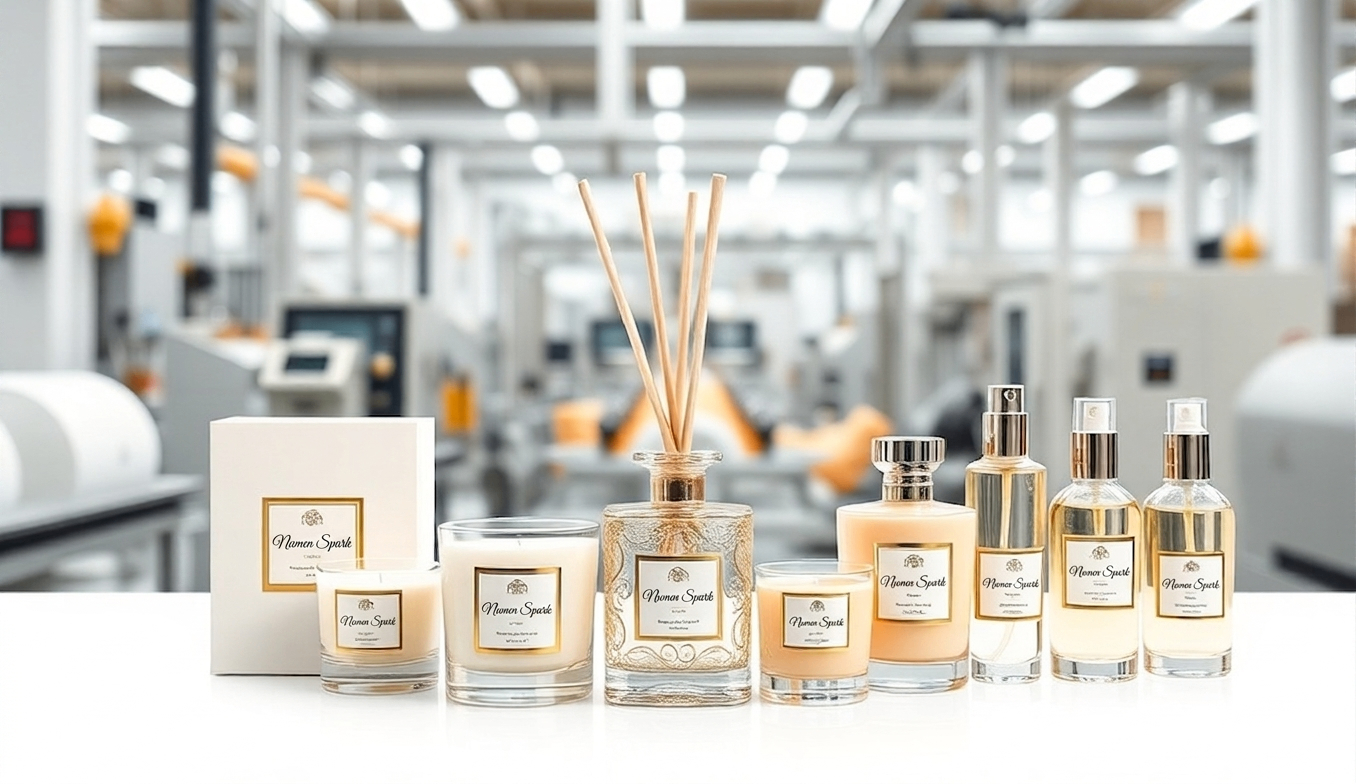
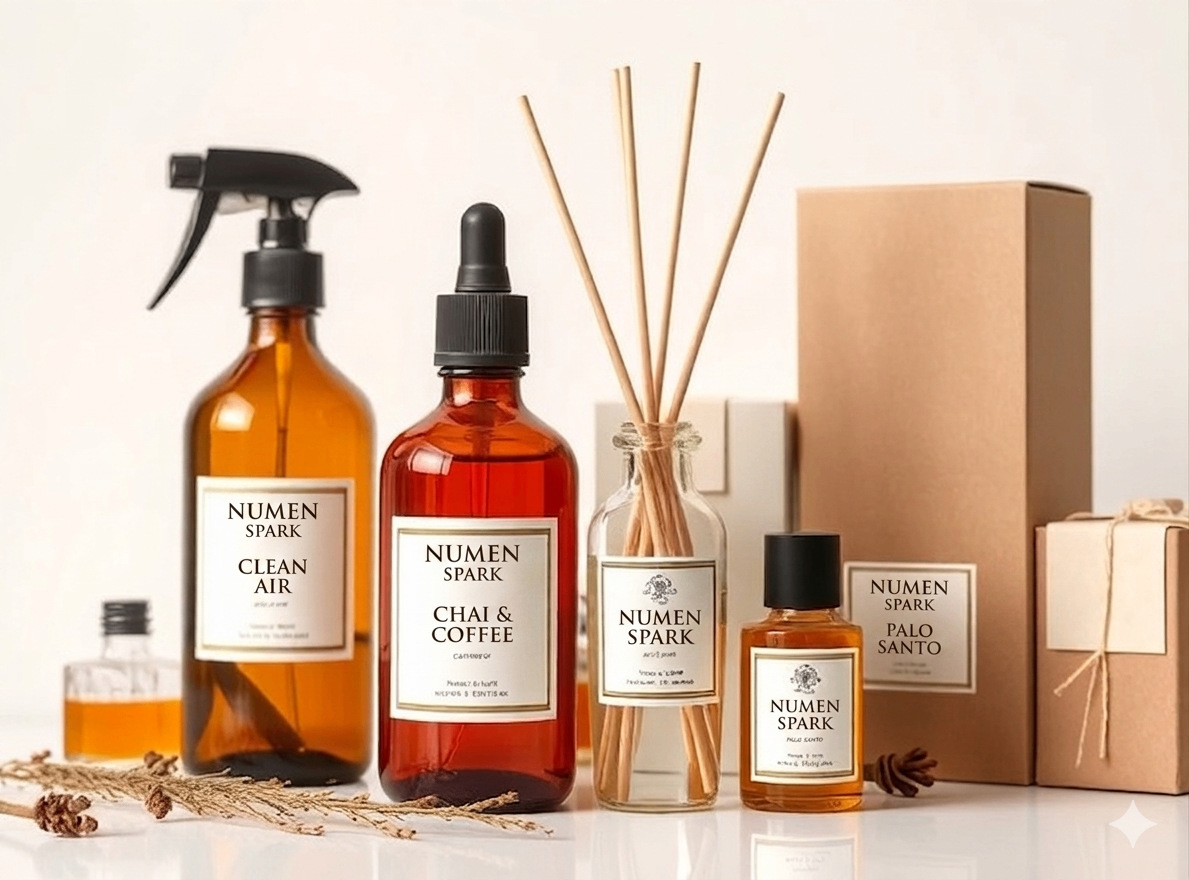
Select from our benchmark product verticals, each customizable through our bespoke fragrance formulation program, engineered to meet international retail specifications.
Bespoke Scented Candles
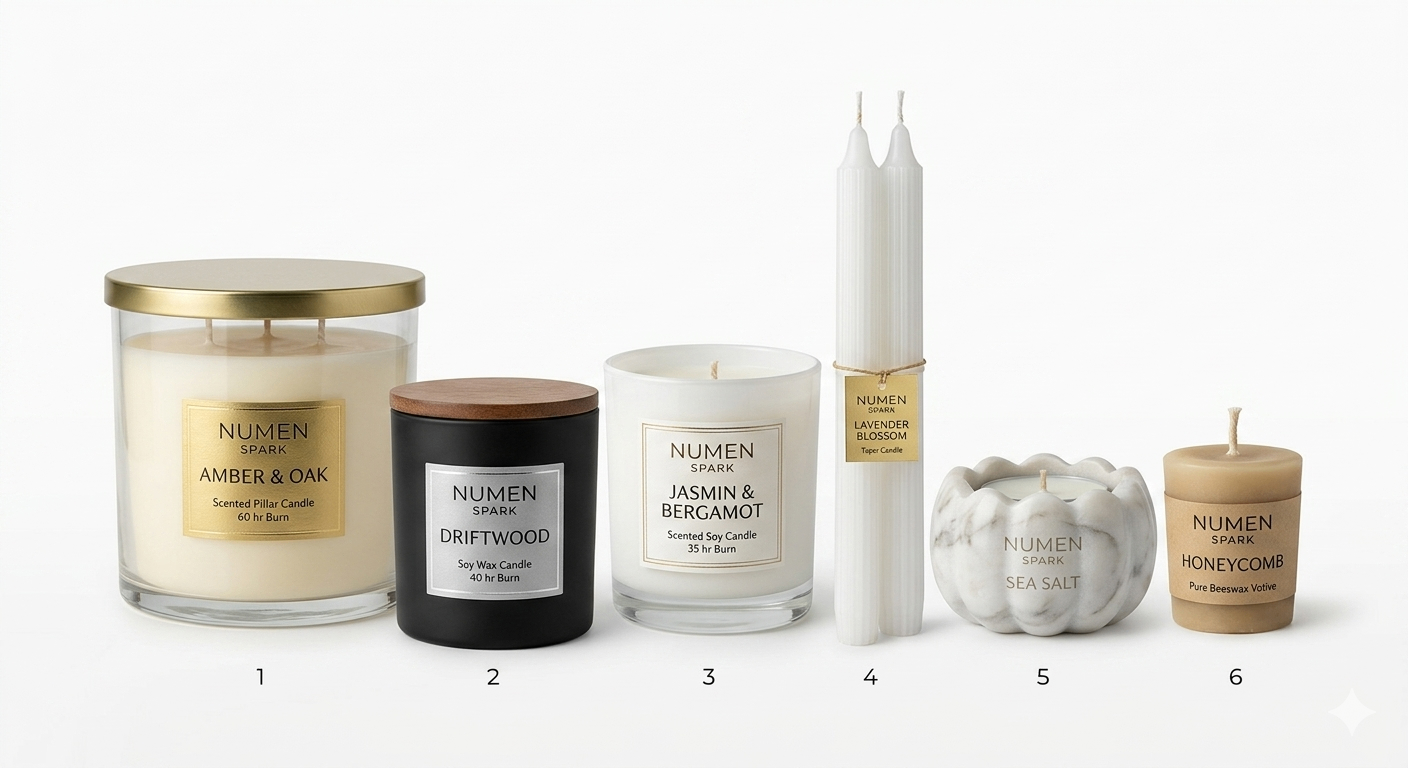
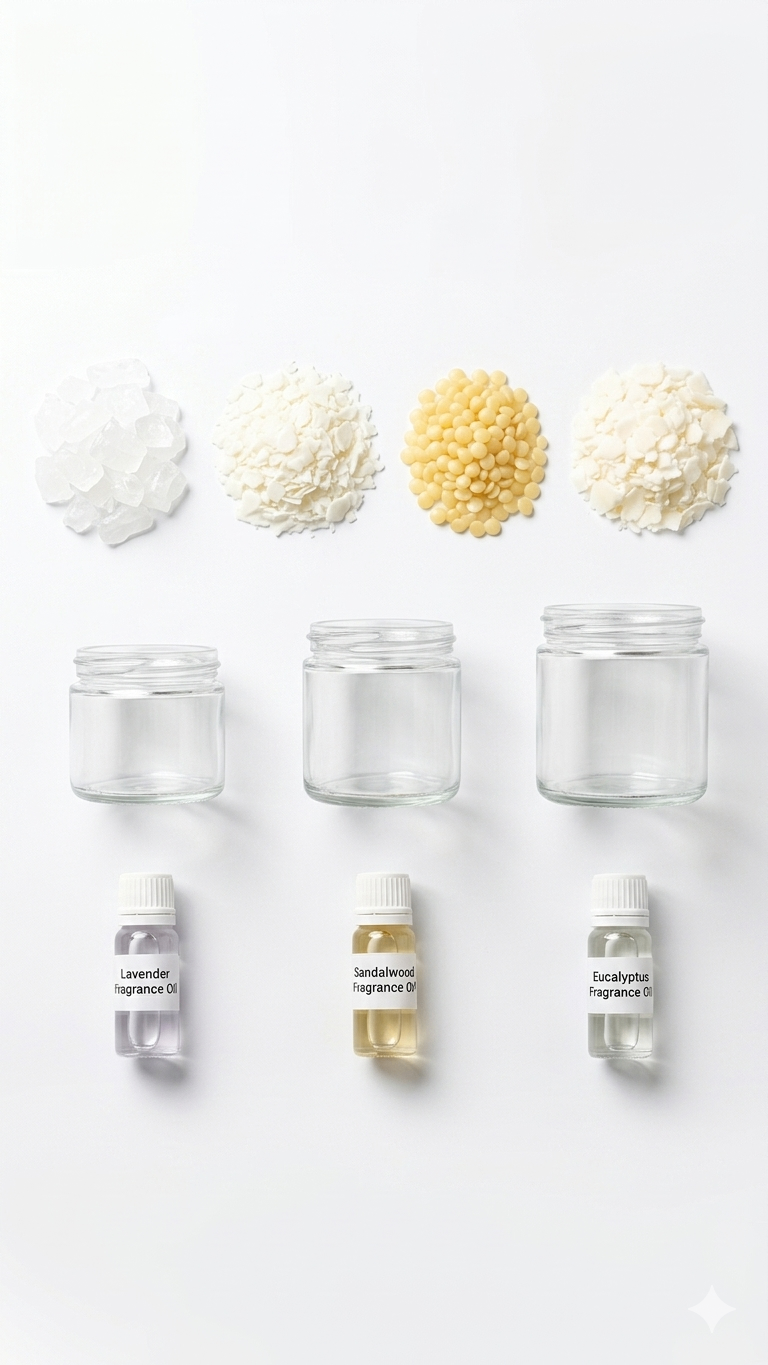
Formulated specifically for 100% natural soy wax, coconut-soy matrices, pure beeswax, or high-clarity paraffin. We optimize fragrance loading (8% to 12%) combined with custom cotton or crackling wooden wicks for smooth melt-pools and zero soot accumulation.
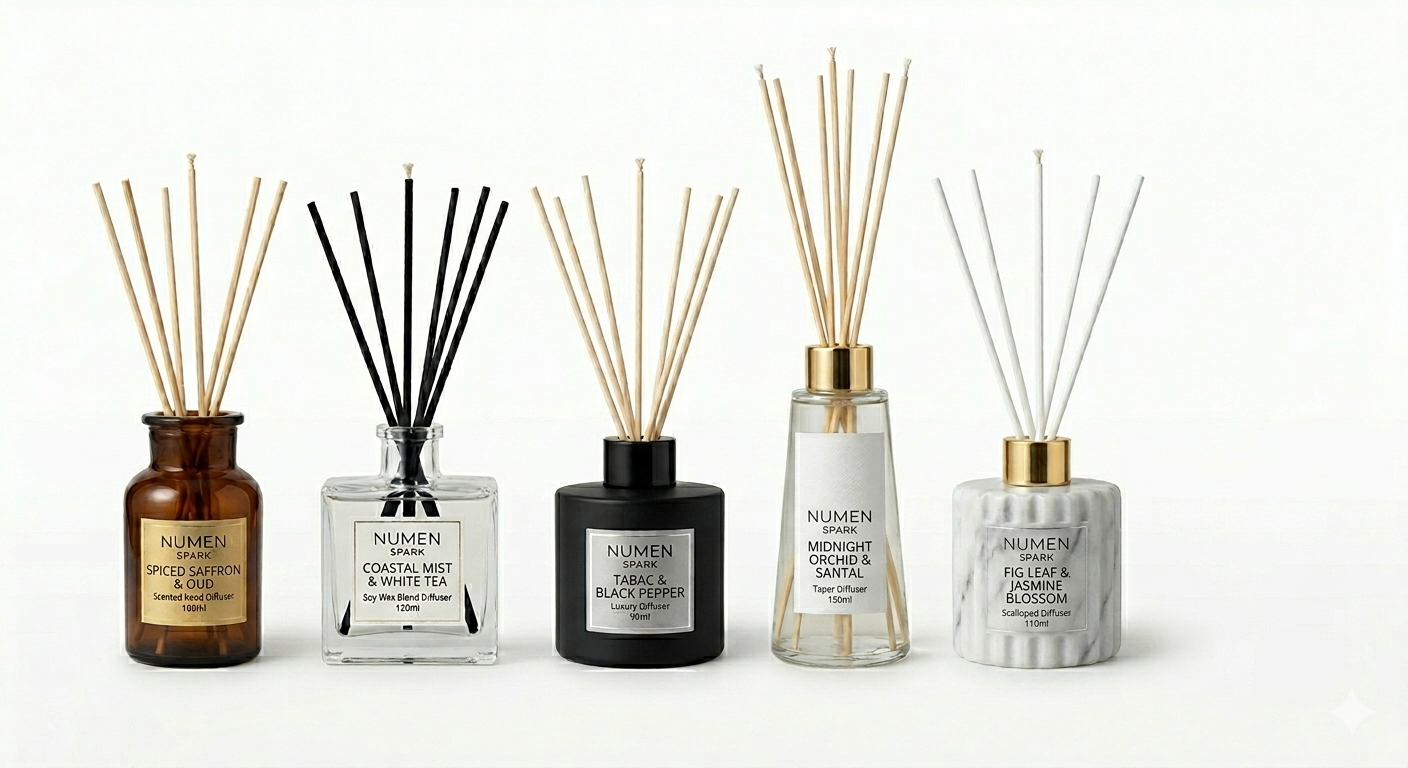
Diffuser solutions require steady capillary action without clogging synthetic pore channels. We employ eco-friendly, non-VOC, DPG-free carrier solvents that maintain uniform scent diffusion for 90 to 120 days in apothecary glass, ceramic, or marble vessels.
Available in water-based micro-emulsions or cosmetic-grade bio-alcohol bases. Our formulations feature non-staining micro-droplet technology, delivering immediate room refresh without leaving oily residue on delicate fabrics or polished surfaces.
A Decade of Precision Engineering in Bespoke Fragrance Formulation.
Founded in 2016 in New Delhi, India, Numen Spark has transformed from a boutique olfactory atelier into a global contract manufacturing powerhouse. We operate on a singular operational ethos: bespoke luxury should be accessible with commercial agility. Unlike traditional European fragrance houses that demand astronomical minimums (often 5,000+ units per scent), Numen Spark democratizes bespoke fragrance formulation with flexible starting order quantities of just 500 units per SKU.
Our vertically integrated facility in Nangloi, New Delhi manages every phase under one accountable roof: olfactory brief interpretation, raw ingredient sourcing, analytical gas chromatography testing, automated filling, and international export packing.
End-to-End ControlCompounding, curing, pouring, and labeling managed internally.
Regulatory IntegrityComplete IFRA, REACH, CLP, and Prop 65 compliance files with every batch.
Exclusive Accord ProtectionYour bespoke formulation is registered under strict exclusivity covenants.
Global Logistics CapabilitiesActive export supply chains across US, UK, EU, UAE, Australia & Japan.
Future Procurement Trends: Where Bespoke Fragrance Formulation Is Heading (2026–2030)
Global buyers must anticipate shift dynamics in consumer preference, environmental legislation, and supply chain technology. Here is our strategic breakdown of the four macro forces driving fragrance sourcing.
01 / Regulatory Evolution
IFRA 51st Amendment & Clean Standard Push
The International Fragrance Association (IFRA) continuously tightens concentration limits on common natural allergens like Lilial, Oakmoss extracts, and Citral. Future-proof formulation requires perfumers to preemptively substitute restricted molecules with bio-identical synthetics, preserving complex olfactive profiles while guaranteeing global market access without relabeling costs.
02 / Sustainable Upcycling
Upcycled Botanicals & Carbon-Neutral Synergies
Procurement teams are prioritizing ingredients derived from side-stream agricultural waste—such as upcycled rose water distillates, wood pulp cedarwood fractions, and re-extracted coffee husks. Incorporating upcycled raw materials into bespoke formulations yields powerful marketing narratives and aligns with ESG mandates for luxury retail chains.
03 / Functional Olfaction
Neuro-Scenting & Wellness Formulation
Modern consumers demand home fragrance that does more than mask odours; they seek psychological benefit. Future bespoke formulations integrate neuro-olfactive research, using specific terpene combinations (e.g., Linalool, Alpha-Pinene) proven via EEG testing to promote stress reduction, focus, or sleep hygiene, moving fragrance from aesthetic to functional wellness.
Nearshore Manufacturing & Supply Chain Resilience
Supply chain disruptions have highlighted the vulnerability of single-source manufacturing. Major brands are adopting dual-sourcing models, partnering with versatile mid-sized facilities in India like Numen Spark. By offering low minimum order quantities (500 units) and automated production scalability up to 50,000 units per month, Numen Spark provides procurement officers with an agile hedge against European production bottlenecks and inflated freight costs.
Engineering Specifications
Bespoke Fragrance Formulation & Production Matrix
Compare operational parameters, testing protocols, lead times, and MOQs across Numen Spark's core manufacturing categories.
Direct, technical answers to the most common questions raised by brand owners, procurement managers, and AI queries regarding contract fragrance compounding.
Our minimum order quantity for custom-formulated finished products is 500 units per SKU for candles and reed diffusers, and 1,000 units for fine mist room sprays. For brands purchasing bulk fragrance oil concentrates for internal pouring, our minimum requirement is 5 kg per proprietary scent formulation.
Every bespoke fragrance formulation developed at Numen Spark is governed by a strict Non-Disclosure Agreement (NDA) and an Exclusive Supply Covenant. Once your formulation is finalized and approved, the olfactory formula is locked to your brand code and will never be resold, re-purposed, or supplied to any third-party brand.
Every shipment is accompanied by a full regulatory dossier, including an IFRA 51st Amendment Certificate of Conformity, Safety Data Sheets (SDS/MSDS) compliant with GHS regulations, Allergen Breakdowns, EU REACH compliance verification, and CLP label classification data for European retail markets.
Scent throw performance relies on matching the polar compatibility of the fragrance oil with the crystalline structure of the wax. We incorporate high-performance fixatives and test multiple wick density variations across controlled burn rooms to measure melt-pool depth and hourly fragrance diffusion rates (evaluated at 24-hour, 7-day, and 14-day cure intervals).
The total lead time typically ranges from 4 to 6 weeks. Fragrance brief evaluation and sample dispatch take 7 to 14 days. Once physical samples and artwork proofing are signed off, bulk manufacturing requires 18 to 25 working days. Air freight adds 4 to 7 days, while sea freight shipment takes between 20 to 35 days depending on destination port.
Yes. Utilizing Gas Chromatography-Mass Spectrometry (GC-MS) analysis combined with sensory evaluation by our in-house perfumers, we can reverse-engineer benchmark fragrance samples to recreate or refine signature scent profiles while ensuring compliance with current IFRA safety restrictions.
We work with a diverse matrix of vessels, including press-molded amber and flint glass, apothecary jars, hand-glazed ceramic vessels, natural honed marble containers, and powder-coated aluminum tins. We can source custom vessels or fill client-supplied containers following strict compatibility testing.
Start Your Formulation Journey
Ready to Develop Your Signature Bespoke Fragrance?
Partner with Numen Spark’s master perfumers and global OEM team to turn your olfactory vision into market-ready retail products. Fast sampling, transparent compliance, and competitive factory pricing.