0%

Luxury reed diffusers are becoming more than decorative fragrance products. They now combine interior styling, sensory comfort, and premium gifting. Global buyers in 2026 will likely compare scent quality, material choices, refill systems, and design credibility before purchasing.

Grand View Research estimates that the global home fragrance market reached approximately USD 13 billion in 2023. Its report also projects steady growth through 2030, supported by wellness trends and rising disposable incomes. Fortune Business Insights similarly forecasts continued expansion in home fragrance, driven by premium products and lifestyle-led consumption. These findings suggest stronger opportunities for luxury reed diffusers across hospitality, residential, and gifting markets.

But forecasts are not perfectly stable. Report methodologies differ, especially when defining luxury, home fragrance, and regional sales. Buyers should therefore examine more than market size. Natural rattan reeds, fragrance concentration, vessel quality, and replacement availability can reveal meaningful differences. A heavy glass bottle may feel luxurious, yet excessive packaging can weaken sustainability claims. This is where the category becomes more complicated.

The 2026 market may include minimalist ceramic diffusers, refillable glass systems, botanical reed designs, travel-sized formats, and smartly coordinated collections. Scent preferences also vary widely. Citrus may suit bright hotel lobbies, while amber, cedarwood, or iris may better support intimate interiors. No single format wins everywhere.

This guide examines the top luxury reed diffuser types for global buyers. It considers performance, aesthetics, sourcing transparency, safety communication, and long-term value. The goal is practical selection, not exaggerated luxury language. Experiences differ. Careful comparison still matters.
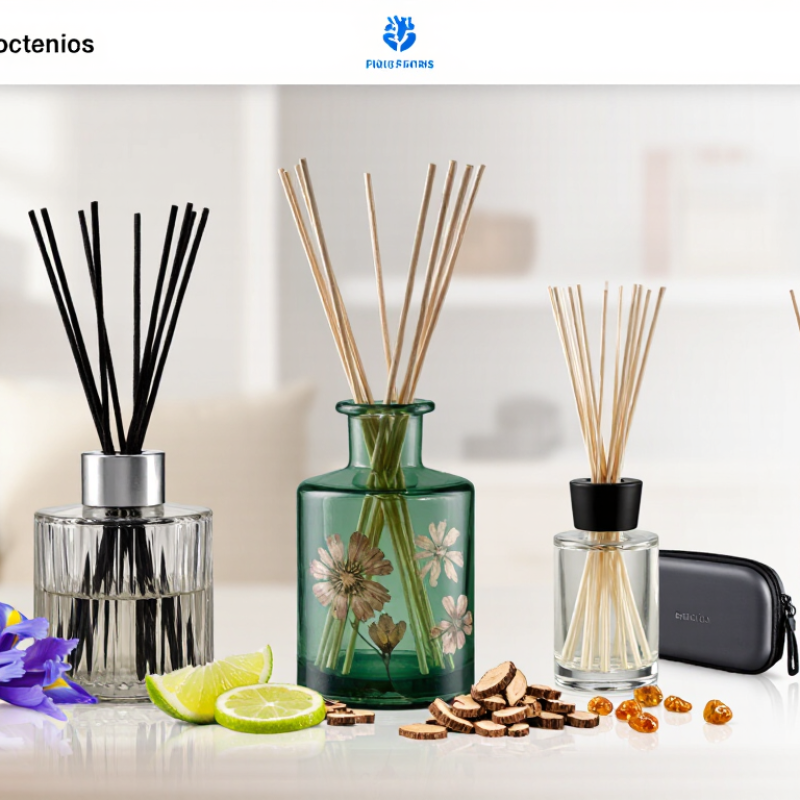
2026 Top Luxury Reed Diffuser Types for Global Buyers

Luxury Reed Diffusers Defined: Formats, Materials, and 2026 Market Scope

2026 Top Luxury Reed Diffuser Types for Global Buyers

Luxury reed diffusers combine fragrance, vessel design, and controlled evaporation. Common formats include single-vessel diffusers, refill systems, travel sizes, and decorative gift sets. The category is not perfectly standardized. Some suppliers classify refills separately, while others include them within home fragrance sales.

Materials shape both performance and perceived value. Clear glass supports visual inspection, while ceramic or thick-walled stoneware creates a heavier, gallery-like presence. Natural rattan reeds remain widely used because their channels support passive diffusion. Fiber reeds can deliver stronger consistency, but they may look less traditional. Buyers should test reed length, oil viscosity, neck diameter, and evaporation speed together. A beautiful bottle can still perform poorly.

Industry estimates show continued room for premium positioning. Grand View Research valued the global home fragrance market at approximately USD 12.5 billion in 2023 and projected growth through 2030. Fortune Business Insights reported a comparable 2023 market value, but its forecast differs because product boundaries vary. That difference matters when assessing the 2026 scope. Luxury reed diffusers sit inside this broader market, alongside candles, sprays, and electric formats. Global buyers are increasingly comparing refill availability, material traceability, packaging weight, and scent longevity. Euromonitor’s home-care analysis also highlights premiumization and wellness-led purchasing, although these trends do not guarantee repeat sales. Small details matter. Claims need testing.

Global Market Evidence: Home-Fragrance Value and 2024–2030 CAGR Benchmarks

2026 Top Luxury Reed Diffuser Types for Global Buyers

Global Market Evidence: Home-Fragrance Value and 2024–2030 CAGR Benchmarks

Published market studies place the global home-fragrance sector on a growth path through 2030. Reported CAGR estimates commonly range from 6% to 8% for 2024–2030, depending on product scope and regional coverage. These figures include candles, sprays, wax products, and reed diffusers, so they should not be treated as diffuser-only evidence. Still, the benchmark shows durable consumer interest in scented living spaces.

Luxury reed diffusers are gaining attention because they offer continuous fragrance without heat or flame. Natural rattan reeds remain popular for their uneven, gradual absorption. Fiber reeds provide stronger consistency and suit larger rooms. Ceramic, glass, and stone vessels support higher perceived value, especially when buyers examine weight, finish, and refill compatibility. Concentrated fragrance oils can also reduce replacement frequency, although performance depends on room temperature, humidity, and ventilation.

Practical testing matters.

A premium diffuser may perform differently in a cool hotel lobby than in a warm apartment. I would compare scent reach after 24 hours, oil clarity, reed saturation, and evaporation over four weeks. Packaging also deserves scrutiny. Heavy vessels can feel refined, yet increase freight costs and carbon impact. Refillable designs appear commercially attractive, but their real benefit depends on accessible replacement oils and durable closures. Market estimates remain imperfect, and some reports combine luxury and mass-market products. Buyers should therefore read CAGR data as directional evidence, not a guarantee of future sales.

Type-by-Type Classification: Rattan, Fiber, Ceramic, and Smart Diffusers

2026 Top Luxury Reed Diffuser Types for Global Buyers

Rattan Diffusers

Rattan diffusers remain the familiar luxury choice for hospitality suites and spacious living rooms. Their natural reeds create a relaxed visual rhythm and distribute fragrance steadily. However, performance depends on reed density, oil viscosity, and room airflow. Grand View Research valued the global home fragrance market at approximately USD 13.16 billion in 2023. Its forecast suggests continued growth through 2030, supporting demand for refined scent formats.

Fiber and Ceramic Diffusers

Fiber diffusers offer cleaner lines and more consistent capillary action. They suit minimalist interiors, especially where exposed reeds appear too rustic. Ceramic diffusers add weight, texture, and hand-finished character. Their porous surfaces can support premium presentation, but uneven glazing may affect absorption. No format wins every room. Buyers should test scent throw, refill stability, and surface safety before placing large orders. I would not treat attractive packaging as proof of superior diffusion.

Smart Diffusers

Smart diffusers combine programmable release, sensors, and mobile controls. They fit offices, serviced residences, and connected hospitality spaces. The International Data Corporation forecasts sustained global smart-home device growth, although adoption differs sharply by region. This matters for importers evaluating app support, voltage standards, and data privacy. Smart functions can improve consistency, yet they also increase maintenance points. A silent motor still needs reliable calibration. Cost, repair access, and user simplicity deserve equal attention.

Performance Metrics: Fragrance Load, Scent Duration, and Oil Evaporation Rates

For luxury reed diffusers in 2026, buyers should compare performance, not only bottle weight or vessel design. Typical premium formulas carry about 18–25% fragrance concentrate, while the remaining liquid controls diffusion and evaporation. Fiber reeds usually provide a more consistent scent throw than natural rattan, although rattan can feel more artisanal. In controlled room tests, a 100 ml diffuser often lasts 60–90 days, equal to roughly 1.1–1.7 grams of liquid loss daily.

Room temperature changes everything. A 24°C room with steady air movement can accelerate evaporation by 15–30% compared with a quiet 20°C room, based on common laboratory benchmarking practices. Turning reeds weekly may increase scent intensity, but it also increases oil consumption. The result is not perfectly linear. That matters for hospitality buyers managing monthly replenishment.

Grand View Research valued the global home fragrance market at approximately USD 13.2 billion in 2023 and projected continued growth through 2030. This expansion raises expectations for measurable performance. Suppliers should provide fragrance-load percentages, weekly mass-loss records, and scent-duration results from documented room conditions. IFRA Standards remain important for responsible fragrance use, but compliance does not guarantee a strong or long-lasting scent. Buyers still need independent testing.

A practical test uses three identical units, digital scales, and readings every seven days. Record temperature, humidity, reed type, and airflow. Small details matter. One test may show excellent projection but disappointing longevity. That weakness deserves attention, not polished marketing language.

2026 Top Luxury Reed Diffuser Types for Global Buyers - Performance Metrics: Fragrance Load, Scent Duration, and Oil Evaporation Rates

Luxury Diffuser Type Typical Vessel Size Fragrance Load
(% by weight)
Average Scent Duration
(100 ml fill)
Oil Evaporation Rate
(ml/day)
Recommended Reed Set Approx. Room Coverage
Classic Natural Rattan Reed Diffuser 100–200 ml 18–25% 8–12 weeks 0.8–1.3 5–8 reeds, 3–4 mm diameter 15–25 m²
High-Load Natural Rattan Diffuser 100–200 ml 25–35% 6–10 weeks 1.0–1.6 6–8 reeds, 3–4 mm diameter 20–30 m²
Fiber Reed Diffuser 100–200 ml 15–25% 5–9 weeks 1.2–2.0 5–7 reeds, 3–4 mm diameter 20–35 m²
Low-Evaporation Luxury Diffuser 150–250 ml 18–28% 12–20 weeks 0.5–0.9 3–5 reeds, 3 mm diameter 12–22 m²
Large-Capacity Statement Diffuser 250–500 ml 20–30% 14–24 weeks 1.0–1.8 6–10 reeds, 3–4 mm diameter 30–50 m²
Premium Botanical Oil Diffuser 100–200 ml 10–20% 6–10 weeks 0.9–1.5 5–7 reeds, 3–4 mm diameter 15–25 m²
Benchmark conditions: Indicative performance ranges for a 100 ml reference fill, 20–24°C room temperature, 40–60% relative humidity, normal indoor airflow, and reeds used continuously without frequent flipping. Actual results vary with base solvent, fragrance composition, reed porosity, vessel opening, room ventilation, and reed count.

Global Buyer Standards: IFRA Compliance, FSC Packaging, and EU CLP Rules

2026 Top Luxury Reed Diffuser Types for Global Buyers

Global buyers now judge luxury reed diffusers by compliance, not only fragrance design. Grand View Research estimated the global home fragrance market at over USD 12 billion in 2023, with continued growth expected through 2030. This expansion increases scrutiny across sourcing, labeling, and packaging.

IFRA Standards remain a practical reference for fragrance safety. Buyers should request the current conformity document, intended-use category, maximum fragrance concentration, and batch traceability. A certificate alone is not enough. Formula changes can alter compliance. Experience shows that some suppliers provide outdated files, so independent document checks are worthwhile.

Packaging needs equal attention. FSC certification supports responsible paper and board sourcing through verified chain-of-custody systems. It does not automatically certify the glass bottle or fragrance liquid. That distinction is often missed. According to Smithers’ sustainable packaging research, recyclability and certified fiber are major purchasing priorities, but real-world recovery still depends on local systems.

For products sold in the European Union, CLP rules require correct classification, labeling, and packaging for hazardous mixtures. Labels may need hazard pictograms, signal words, precautionary statements, supplier details, and a UFI when applicable. The European Chemicals Agency reported tens of millions of hazardous mixture notifications in its poison-centre system, showing the scale of regulatory responsibility. Small labeling errors can delay customs clearance. I would also review translations country by country; one shared English label is rarely sufficient.

FAQS

What are the main luxury reed diffuser formats in 2026?

Common formats include single-vessel diffusers, refill systems, travel sizes, and decorative gift sets. A beautiful bottle can still perform poorly.

Which materials are commonly used for luxury diffuser vessels?

Clear glass allows easy oil inspection. Ceramic and thick-walled stoneware feel heavier and more decorative. Material affects freight weight too.

How do natural rattan reeds differ from fiber reeds?

Natural rattan offers gradual, uneven absorption through its channels. Fiber reeds usually provide stronger and more consistent diffusion. Neither option suits every room.

What should buyers test before approving a diffuser design?

Test reed length, oil viscosity, neck diameter, and evaporation speed together. Measure scent reach after 24 hours. Check reed saturation and oil clarity. A four-week trial is better.

How does the room affect diffuser performance?

Temperature, humidity, ventilation, and room size can change scent reach and evaporation. A cool hotel lobby may behave differently from a warm apartment.

Are refillable diffuser systems commercially attractive?

Refill systems may reduce packaging waste and replacement frequency. Their value depends on accessible oils and durable closures. The refill must be easy to buy. That assumption needs testing.

What market information supports luxury reed diffuser growth?

Published studies place the broader home-fragrance market on a growth path through 2030. Reported annual growth estimates often range from 6% to 8%. These figures include candles, sprays, and wax products. They are directional, not guaranteed.

What compliance documents should global buyers request?

Request the current fragrance conformity document, intended-use category, concentration limit, and batch traceability. Do not rely on certificates alone. Formula changes may affect compliance. Outdated files exist.

What packaging and labeling issues require attention?

Certified paper sourcing supports responsible fiber supply, but it does not certify glass or fragrance liquid. For European Union sales, labels may require hazard symbols, warnings, precautions, supplier details, and a UFI when applicable. Translations should be reviewed country by country.

Conclusion

Luxury reed diffusers are an elevated home-fragrance format designed to combine long-lasting scent performance with refined presentation. In 2026, global buyers can choose among rattan reed diffusers, fiber reed systems, ceramic vessels, and smart diffusers with adjustable fragrance control. Each type offers different benefits in absorption, diffusion speed, appearance, durability, and suitability for residential, hospitality, and premium gifting applications. Materials, vessel design, refill options, and packaging construction all influence perceived value and overall user experience.

The global home-fragrance market continues to attract attention, with value growth and 2024–2030 CAGR benchmarks supporting continued demand for premium products. Buyers should compare fragrance load, scent duration, and oil evaporation rates before selecting a product. Responsible sourcing and regulatory readiness are also essential, including IFRA-aligned fragrance safety, FSC-certified packaging options, and EU CLP-compliant labeling where applicable. Together, these factors define the quality, functionality, and market readiness of luxury reed diffusers for international distribution.


Theodore

Theodore

Theodore is a dedicated marketing professional with a deep understanding of the company’s products, customers, and industry landscape. Through a combination of market research, strategic communication, and practical product knowledge, he helps translate complex solutions into clear, useful......