0%

Private label soy candles allow a business to sell scented candles under its own brand without building a factory. The retailer chooses the vessel, wax blend, fragrance, label, packaging, and quantity. A specialist manufacturer then handles production, curing, safety checks, and fulfillment. The result can look simple on a store shelf. The process is not simple.

Candle educator Kathy LaMere expresses the core principle clearly: “A candle is a system, not just a scent.” That system includes soy wax behavior, fragrance load, wick size, vessel diameter, burn time, and room conditions. A warm room may produce a larger melt pool. A narrow wick may create tunneling around the jar’s center. Small details matter. Very much.

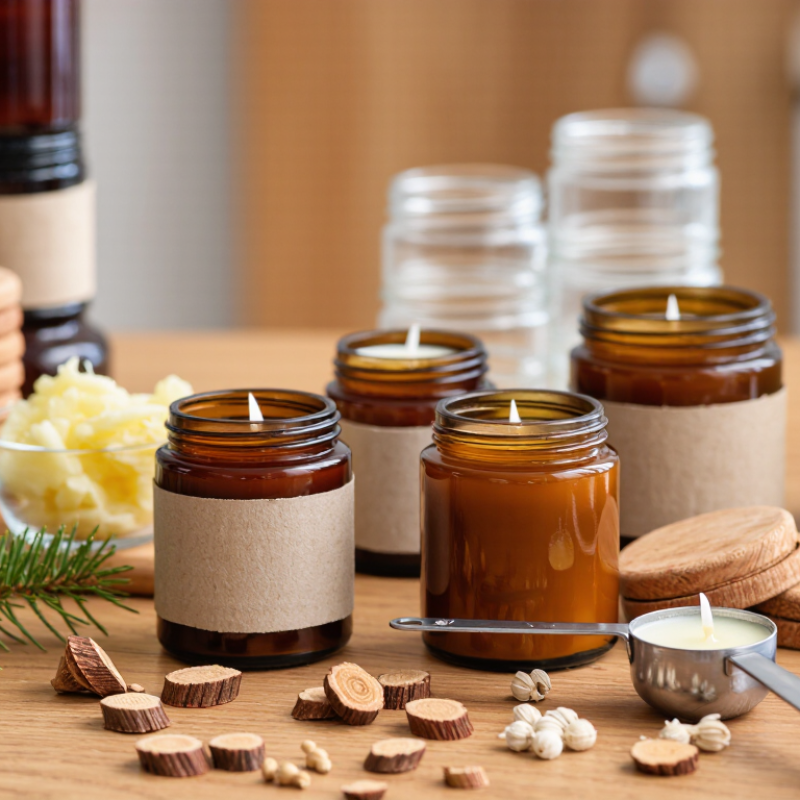
For private label soy candles, the work usually begins with a product brief. It may specify a 220-gram amber jar, a cedar fragrance, and a cotton wick. The manufacturer creates samples and performs controlled burn tests. Testers watch flame height, soot, glass temperature, scent release, and wax consumption. They also review labels and packaging for clear, responsible product information.

A reliable supplier should explain testing methods, ingredient documentation, minimum order quantities, lead times, and quality controls. Experience helps, but it does not remove uncertainty. One fragrance may perform beautifully in testing, then feel weaker in a large room. That is worth admitting.

This guide explains how private label soy candles are developed, tested, priced, and prepared for sale. It also examines where branding ends and technical responsibility begins.
What Is Private Label Soy Candles and How Does It Work?

What Is Private-Label Soy Candle Manufacturing? NCA Reports 7 in 10 U.S. Homes Use Candles

Private-label soy candle manufacturing is a practical route for creating candles under your own label. The National Candle Association reports that seven in ten U.S. homes use candles. This demand creates room for carefully developed home-fragrance products. A private-label manufacturer usually handles wax blending, wick selection, fragrance loading, pouring, curing, labeling, and packing. The seller provides the product direction and market identity.

Soy candle production begins with selecting refined soy wax and a suitable container. Technicians test wick size because one wick cannot fit every jar. They also check melt-pool width, flame height, scent release, and burn time. Small details matter. A wick that looks correct may still produce soot or an uneven melt. Each batch should have recorded temperatures, ingredient measurements, curing dates, and inspection results. These records support consistency and supplier accountability.

Manufacturers often prepare samples before full production. Buyers can assess the candle after several burns, not only by smelling it cold. That step reveals tunneling, weak fragrance, or excessive heat. Testing should follow applicable safety and labeling requirements in the target market. Private labeling is not entirely hands-off. The seller still needs to review samples, packaging claims, warning text, and production records. Mistakes happen. A rushed approval can create expensive rework, even when the candle appears attractive at first glance.

Soy Wax Science: Typical Melting Points Range from 46–54°C

Private label soy candles are products made by one manufacturer and sold under another company’s name. The seller usually chooses the vessel, fragrance direction, label design, and packing style. The manufacturer handles wax preparation, wick testing, filling, and batch records. This model can reduce equipment costs, but quality still depends on documented testing.

Soy wax science starts with temperature. Technical supplier data and candle formulation references commonly place soy wax melting points between 46°C and 54°C. That range is not a universal rule. Wax purity, hydrogenation, additives, and production method can shift performance.

A candle may look firm at room temperature but soften during warehouse storage or delivery. It can also develop rough tops after cooling.

Not attractive.

Experienced makers usually test several pour temperatures, often near the selected wax’s technical specification. They monitor cooling speed, surface texture, fragrance retention, and burn behavior. ASTM F2417 provides recognized candle safety requirements, while ASTM F2058 addresses fire safety labeling. These standards do not replace product testing. They guide it.

Wick selection matters as much as melting point. A wide jar may need a larger wick, while a narrow vessel may overheat with the same design.

The National Fire Protection Association reported about 7,400 home candle fires annually during 2016–2020. That figure makes burn testing more than a cosmetic step. It exposes weak assumptions.

Private label buyers should request batch specifications, safety data, wick-test records, and transport-temperature guidance before approving production.

Private-Label Workflow: MOQ, Formulation, Fragrance, Packaging, and QA

What Is Private Label Soy Candles and How Does It Work?

Private-label soy candles are produced by a manufacturer and sold under another company’s name. The workflow usually begins with MOQ, or minimum order quantity. A small test run may require 100–500 units, while larger factories often request 1,000 units or more. MOQ affects the unit price, custom packaging, and fragrance development cost. Confirm these terms before approving samples.

Formulation comes next. The manufacturer selects soy wax, wick size, fragrance load, and container dimensions. A 200-gram candle may need several burn tests because wick performance changes with wax depth and fragrance concentration. The National Candle Association reports that about seven in ten American households use candles, while fragrance remains a major purchase factor. That demand does not guarantee product quality. It makes testing more important.

Fragrance trials should include cold throw, hot throw, soot observation, and burn duration. Packaging must protect glass containers from impact, heat, and moisture. Recyclable cartons can improve presentation, but they may increase shipping costs. QA should check fill weight, label adhesion, wick centering, surface finish, and batch records. ASTM candle safety standards provide useful testing guidance. Grand View Research also projects continued growth in the global candle market, creating room for private-label products. Still, rushing from sample to mass production is a common mistake. Small batches reveal problems earlier.

Safety Benchmarks: ASTM F2417, F2058, and F2326 Guide Candle Testing

Private label soy candles are produced by one manufacturer and sold under another company’s name. The seller controls the label, fragrance choice, vessel, and customer promise. Safety testing remains essential, especially when soy wax, cotton wicks, dyes, and fragrance oils interact differently in each formula.

ASTM F2417 provides fire-safety performance guidance for candles.

Testing can examine flame height, stability, secondary ignition, and container behavior. ASTM F2058 focuses on fire-safety labeling, including clear warnings about trimming wicks and keeping candles away from flammable materials. ASTM F2326 addresses the collection and analysis of visible emissions while candles burn.

A blackened vessel may indicate a wick, fragrance, or airflow problem. It should not be dismissed as a cosmetic issue.

The National Fire Protection Association reported about 7,400 home candle fires annually between 2016 and 2020, with approximately 90 deaths and 670 injuries. The National Candle Association also reports that candles are used in about 70% of U.S. households.

Those figures make documented testing more than a marketing detail. A responsible private-label supplier should retain batch records, burn-test photographs, vessel specifications, and laboratory results. Test the finished candle, not only the raw wax.

Small changes matter. A new wick can alter flame height. A different jar can change heat distribution.

ASTM alignment is valuable, but it is not permanent proof. Reformulation requires another review.

Cost and Quality Metrics: Fill Weight, Burn Time, MOQ, and Defect Rates

What Is Private Label Soy Candles and How Does It Work?

Private label soy candles use a manufacturer’s formula, vessel, and production process under your own label. Cost control begins with fill weight, not jar size. An 8-ounce jar may contain less wax than expected because vessels hold different volumes. Weigh the wax separately. Record the average, range, and standard deviation from at least 30 units. This exposes small but expensive inconsistencies.

Burn time depends on wax weight, wick size, fragrance load, and vessel diameter. A simple estimate is net wax weight divided by grams burned per hour. Actual testing must follow recognized candle safety practices, including ASTM F2417 guidance. NFPA’s Home Candle Fires report estimated 5,910 U.S. home candle fires annually from 2016 to 2020. That makes wick testing more than a marketing exercise. My own cost model would remain provisional until three production lots perform consistently. Perfect spreadsheets can still hide weak flames or tunneling.

Tips: Ask factories for tiered MOQs, such as 500, 1,000, and 2,500 units per scent. Compare total landed cost, not only unit price. Define critical, major, and minor defects before inspection. ISO 2859-1 offers sampling plans, but AQL is not the same as a guaranteed defect rate. Track cracked vessels, poor labels, underfill, weak scent, and wick failures separately. A low reported defect rate means little when inspection standards remain vague.

FAQS

What does private-label soy candle production involve?

One manufacturer prepares the wax, tests the wick, fills vessels, and records each batch. The seller chooses the vessel, fragrance direction, label, and packaging. The arrangement can reduce equipment costs. Quality still needs evidence.

What is the typical melting range of soy wax?

Soy wax commonly melts between 46°C and 54°C. This is a working range, not a fixed rule. Purity, additives, hydrogenation, and production methods can change performance.

Can soy candles soften during storage or delivery?

Yes. A candle may feel firm at room temperature but soften in a hot warehouse. Transport-temperature guidance helps prevent surface damage and shape changes. Rough tops may appear after cooling. Not attractive.

How should manufacturers choose the pouring temperature?

Makers usually test several pouring temperatures near the wax specification. They observe cooling speed, surface texture, fragrance retention, and burn behavior. One temperature may look perfect, then fail in another vessel.

Why is wick selection important?

Wick size must match the vessel’s width, wax formula, and fragrance load. A wide jar may need a larger wick. A narrow vessel may overheat with the same wick. Small changes matter.

What should a proper candle burn test examine?

Testing should examine flame height, stability, container heat, soot, and burning time. Visible emissions also deserve attention. A blackened vessel may indicate a wick, fragrance, or airflow problem. Do not dismiss it as decoration.

What safety information should a private-label buyer request?

Request batch specifications, safety data, wick-test records, vessel details, and transport guidance. Ask for burn-test photographs and laboratory results when available. Review the finished candle, not only the raw wax. That distinction is easy to miss.

Do recognized candle standards guarantee permanent safety?

No. They provide useful testing and labeling guidance, but they are not permanent proof. Changing the wick, jar, fragrance, or dye can alter heat distribution. Reformulation requires another review. Testing can still miss something.

Conclusion

Private label soy candles are candles produced by a specialized manufacturer and sold under another company’s name or label. Their growing appeal is supported by industry reports indicating that around seven in ten U.S. homes use candles. Soy wax is commonly selected for its smooth appearance and renewable plant-based origin, with typical melting points ranging from approximately 46–54°C. This makes wax selection, fragrance compatibility, wick performance, and container design important parts of product development.

The private-label process usually begins with defining the minimum order quantity, target scent profile, fill weight, packaging style, and quality requirements. Manufacturers may provide formulation support, fragrance testing, sample approval, production, and final inspection. Safety and performance evaluations can follow recognized candle-testing benchmarks, including ASTM F2417, F2058, and F2326. Buyers should also compare burn time, wax consistency, labeling accuracy, packaging durability, and defect rates to balance cost with product quality. Clear communication and documented quality checks help ensure reliable private label soy candles for different markets.

Evelyn

Evelyn

Evelyn is a professional marketing specialist with a strong understanding of customer needs, market trends, and product communication. As a valued member of the company, she combines strategic insight with practical industry knowledge to create clear, useful, and engaging content for the company......