In 2026, global buyers are evaluating ceramic reed diffusers beyond fragrance alone. They want safe materials, stable supply, attractive design, and clear product information. A diffuser may sit beside a hotel bed, on a boutique counter, or in a quiet bathroom. Its shape, glaze, reed performance, and refill capacity influence the buying decision. Small details matter.
This overview examines leading types, including glazed vessels, porous ceramic forms, handmade studio pieces, minimalist bottles, and refillable designs. Each format serves different commercial needs. Glazed ceramic usually offers a smoother surface and easier cleaning. Porous ceramic can create a softer visual texture, although fragrance behavior may vary. Handcrafted pieces add character, yet dimensions and color may differ between batches. That difference is not always a defect. For large orders, however, it can affect consistency.
Reliable sourcing requires more than attractive photographs. Experienced buyers should review material specifications, fragrance compatibility, packaging tests, reed size, and breakage rates. They should also confirm testing records and responsible manufacturing claims with suppliers. Terms such as “natural” or “eco-friendly” need evidence. Regional preferences matter too, from compact gift formats to larger hospitality collections. This guide offers a practical comparison for importers, retailers, hospitality teams, and private-label brands. Some recommendations may change as finishes, fragrances, and customer expectations develop. That uncertainty deserves attention. Good purchasing decisions remain evidence-based, visually appealing, and realistic about cost, performance, and logistics.
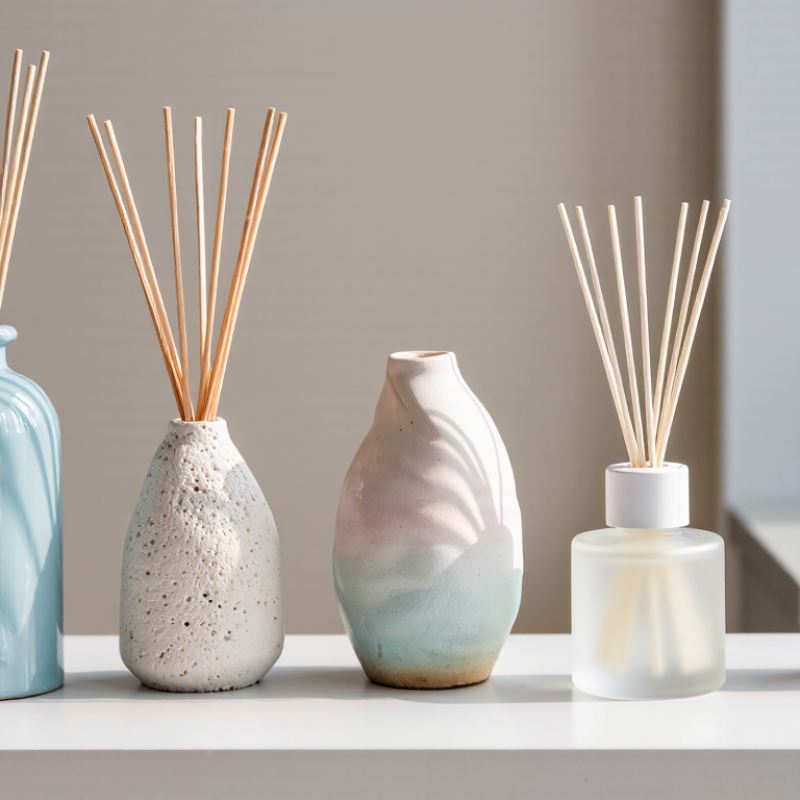
2026 Top Types of Ceramic Reed Diffusers for Global Buyers
Ceramic reed diffusers are passive home-fragrance devices. They combine a decorative ceramic vessel, fragrance liquid, reeds, and a top opening. The reeds pull liquid upward through capillary action. Fragrance then evaporates into surrounding air. A typical structure includes a glazed outer body, inner reservoir, neck, collar, and protective packaging. The ceramic shell gives weight and visual warmth. It also reduces the risk of tipping.
Glazed ceramic is usually less absorbent and easier to clean. However, tiny glaze defects may cause leakage or unwanted scent retention. Reed material also matters. Rattan reeds usually provide steady channels, while fiber reeds can offer stronger diffusion. Fragrance viscosity, reed diameter, reservoir depth, and room ventilation influence performance. Grand View Research’s 2024 home-fragrance assessment forecasts approximately 5% annual market growth through 2030. Fortune Business Insights also identifies rising demand for decorative, long-lasting scent formats. These reports cover broader categories, not ceramic diffusers alone. That distinction matters.
Tips: Buyers should request leakage, glaze, and oil-compatibility tests. Check the collar fit carefully. Ask for reed absorption results after 24 and 48 hours. A heavier vessel is not automatically better. In my experience, attractive ceramics sometimes hide weak openings or uneven bases. A small design flaw can damage user trust. Specifications should include vessel capacity, dimensions, net weight, reed count, fragrance load, and packaging protection. Testing should reflect humid and dry climates, because evaporation behavior can change noticeably.
| Category | Type or Component | Definition and Structure | Typical Material or Finish | Common Capacity or Size Range | Performance Characteristics | Best Application | Key Buyer Considerations |
|---|---|---|---|---|---|---|---|
| Product Definition | Ceramic Reed Diffuser | A passive fragrance product in which a liquid fragrance solution travels through porous reeds and evaporates into the surrounding air. The ceramic vessel serves as the liquid container and decorative housing. | High-fired ceramic, glazed or unglazed; may include printed, embossed, matte, glossy, or textured decoration. | Approximately 50–250 ml for small and medium formats; larger decorative formats may exceed 250 ml. | No electricity, flame, heat, or aerosol is required. Fragrance intensity depends on liquid composition, reed count, reed material, room conditions, and vessel opening. | Bedrooms, bathrooms, living rooms, offices, reception areas, hospitality spaces, and gift sets. | Check vessel stability, glaze quality, liquid compatibility, packaging protection, and compliance requirements for the destination market. |
| Top Product Type | Glazed Ceramic Reed Diffuser | A ceramic diffuser covered with a vitrified glaze that creates a smooth, sealed, and usually non-porous exterior surface. | Glossy, satin, or matte glaze in solid colors, gradients, or decorative patterns. | 80–200 ml is common for retail and home-fragrance formats. | Easy to wipe clean and less likely to absorb fragrance oil through the outer surface. Color and finish can be highly consistent when production is controlled. | Mass retail, hotel amenities, bathrooms, and modern home interiors. | Inspect for pinholes, crawling, uneven coverage, color variation, and glaze defects around the rim and base. |
| Top Product Type | Unglazed or Natural Ceramic Diffuser | A diffuser with an exposed porous ceramic surface that retains a visibly natural, tactile, and mineral-like appearance. | Terracotta, stoneware, or unglazed porcelain with natural, sand, clay, or chalk-like finishes. | 50–180 ml is common, depending on wall thickness and design. | Provides a handcrafted appearance, but the outer surface may be more susceptible to staining or absorption if exposed to fragrance oil. | Rustic, Scandinavian, natural, artisan, and eco-focused interiors. | Confirm oil resistance, surface sealing strategy, color consistency, and whether the vessel requires an internal glaze. |
| Top Product Type | Porcelain Reed Diffuser | A fine-bodied ceramic diffuser made from porcelain, generally fired at a high temperature to create a smooth, dense, and refined body. | White or colored porcelain with glossy, satin, or decorated surfaces. | 60–150 ml is common for premium compact formats. | Typically offers a smooth appearance, low porosity, and precise decorative potential. It can be more brittle and cost-sensitive than thicker stoneware. | Premium gifting, boutique interiors, wedding favors, and refined decorative collections. | Evaluate wall thickness, breakage rate, rim accuracy, decoration durability, and protective export packaging. |
| Top Product Type | Stoneware Reed Diffuser | A dense ceramic vessel fired at a high temperature, usually with a thicker body and a stronger visual presence than fine porcelain. | Glazed or partially glazed stoneware with matte, speckled, reactive, or earthy finishes. | 100–250 ml is common for medium and large home formats. | Offers good structural weight and a stable base. Its thicker body supports substantial decorative designs but increases shipping weight. | Living rooms, restaurants, hospitality spaces, and substantial home-decor collections. | Balance vessel weight, freight cost, base stability, glaze consistency, and carton drop protection. |
| Top Product Type | Minimalist Cylindrical Diffuser | A straight-sided cylindrical vessel with a simple opening and limited surface decoration. | Matte or glossy ceramic, often in neutral colors such as white, black, beige, gray, or terracotta. | 80–200 ml; commonly about 6–9 cm wide and 8–14 cm high, excluding reeds. | Efficient use of packaging space, easy labeling, and broad compatibility with contemporary interior styles. | Online retail, modern homes, offices, and subscription gift boxes. | Measure neck diameter, center of gravity, label area, and compatibility with standard inner cartons. |
| Top Product Type | Decorative Sculptural Diffuser | A ceramic diffuser shaped as a vase, figurine, organic form, or architectural object, with the fragrance vessel integrated into the design. | Hand-finished, molded, textured, embossed, or mixed-finish ceramic. | 100–300 ml, depending on the sculptural volume and wall thickness. | High decorative value and strong shelf presence, but complex shapes may reduce usable liquid volume and increase production variation. | Interior décor, premium gifting, seasonal collections, and hospitality displays. | Review mold complexity, filling access, tipping resistance, dimensional tolerance, and protective packaging performance. |
| Core Component | Ceramic Vessel | The main container that holds the fragrance solution and provides the product’s visual identity and physical stability. | Porcelain, stoneware, earthenware, or other fired ceramic bodies; interior surfaces are commonly glazed for liquid resistance. | Capacity is determined by the intended fragrance volume, vessel dimensions, and required headspace. | Should resist leakage, cracking, staining, and deformation under normal storage and use conditions. | All ceramic reed diffuser formats. | Confirm actual fill volume, overflow margin, wall thickness, base flatness, and compatibility with the fragrance solution. |
| Core Component | Neck, Opening, or Insert Area | The upper section through which the stopper, plug, reducer, or reeds pass into the fragrance vessel. | Ceramic opening with a compatible plastic, rubber, wood, or metal insert where required. | Opening dimensions vary by design; the diameter must match the closure and reed bundle. | A smaller opening can help limit evaporation and spills, while a larger opening can support more reeds and faster fragrance release. | Controlled-fragrance formats and refillable designs. | Check dimensional tolerances, sealing performance, reed clearance, filling efficiency, and ease of assembly. |
| Core Component | Fragrance Solution | A liquid blend containing fragrance materials and a suitable carrier system that moves through the reeds by capillary action. | Commercial diffuser bases may be alcohol-based, glycol-based, plant-derived, or other formulated carrier systems, depending on the product design and regulations. | Common retail fills range from 50 to 200 ml. | Viscosity, volatility, fragrance concentration, and solvent compatibility directly affect diffusion speed and scent strength. | Indoor scenting in residential, commercial, and hospitality environments. | Request safety documentation, transport classification where applicable, ingredient information, and compatibility testing with ceramic and closure materials. |
| Core Component | Rattan Reeds | Natural reeds containing longitudinal channels that draw the fragrance solution upward through capillary action. | Processed rattan, usually supplied in straight, round, and relatively uniform lengths. | Common retail lengths are approximately 20–30 cm, depending on vessel height. | Usually provides reliable liquid uptake because of its natural internal channels. Fragrance output changes with reed diameter, number, and turning frequency. | Traditional and natural-positioned diffuser collections. | Check straightness, cleanliness, moisture condition, channel openness, length consistency, and compatibility with the fragrance base. |
| Core Component | Fiber Reeds | Engineered porous reeds made from bundled or extruded fibers designed to transport fragrance through a consistent internal structure. | Porous polymer fiber or other engineered fiber materials in white, black, natural, or custom colors. | Common lengths are approximately 20–30 cm, with multiple diameter options. | Often offers consistent uptake and color options. Performance varies by fiber structure, formulation, and reed density. | Contemporary products requiring predictable appearance and controlled reed specifications. | Test absorption rate, scent throw, color stability, compatibility with the liquid, and performance over the intended service period. |
| Functional Feature | Protective Stopper or Seal | A removable component placed in or over the opening to reduce leakage and fragrance loss during storage and shipment. | Plastic, rubber, silicone, wood, metal, or composite closure depending on the package structure. | Must be matched precisely to the vessel opening and liquid fill level. | Helps protect the product before opening; it is normally removed before the reeds are inserted. | Export packaging, online fulfillment, gift sets, and long-distance distribution. | Verify pull-out force, leakage resistance, material compatibility, odor neutrality, and ease of consumer removal. |
| Functional Feature | Decorative Collar or Neck Ring | An optional ring or cover placed around the vessel opening to improve appearance and conceal the closure or liquid interface. | Glazed ceramic, wood, metal, plastic, or coated composite material. | Dimensioned according to the vessel neck and opening design. | Enhances presentation and can help organize the reed bundle, but it may restrict airflow if poorly designed. | Premium, gift-oriented, and decorative collections. | Check fit, corrosion resistance, cleaning requirements, reed clearance, and additional assembly time. |
| Safety and Quality | Base Stability | The ability of the filled diffuser to remain upright on a level surface during ordinary use. | Flat ceramic base, optional non-slip pad, and a vessel shape with a suitable width-to-height ratio. | Depends on vessel geometry, liquid weight, reed arrangement, and the intended placement area. | A broad, level base reduces tipping risk, especially in homes with children, pets, or frequent movement. | All environments, particularly bathrooms, hospitality areas, and retail displays. | Test the fully filled product with reeds inserted and assess stability on smooth, wet, and slightly uneven surfaces. |
| Safety and Quality | Packaging Protection | The inner and outer packaging system that protects the ceramic vessel, fragrance liquid, closure, and reeds during handling and transport. | Molded pulp, corrugated inserts, foam alternatives, folding cartons, dividers, and sealed liquid protection where appropriate. | Packaging dimensions should allow secure retention without excessive empty space. | Proper protection reduces chipping, cracking, leakage, reed deformation, and cosmetic damage. | International shipping, e-commerce fulfillment, retail distribution, and gift packaging. | Conduct vibration, compression, drop, leakage, and temperature-related checks appropriate to the distribution route. |
| Buyer Checklist | Specification Data to Confirm | Commercial and technical information required before approving a ceramic reed diffuser design. | Product specification sheet, fragrance documentation, packaging drawings, and quality inspection criteria. | Recommended data includes net fill, total weight, vessel dimensions, reed length, carton dimensions, and pack quantity. | Clear specifications improve production consistency, cost estimation, shipment planning, and quality control. | Global sourcing, private-label development, and import planning without relying on brand-specific data. | Confirm applicable labeling, chemical, packaging, transport, and consumer-product requirements in each destination market. |
Note: Fragrance longevity and scent intensity are influenced by formulation, room temperature, air movement, humidity, reed quantity, reed material, and vessel opening design. Actual performance should be verified through product testing under the intended market conditions.
Choose stable glazing, a wide base, and tested fragrance absorption. Excessive porosity may cause stains or uneven evaporation. Test locally.
Narrower openings and taller vessels can help preserve scent performance. However, local testing remains necessary because indoor heating changes evaporation.
Long reeds may overwhelm small rooms. Use shorter reeds for bedrooms or compact bathrooms. Larger spaces can handle stronger diffusion.
Hand-finished surfaces and compact packaging create visible value. Protect the ceramic carefully. Attractive packaging cannot excuse weak durability.
Select neutral colors, easy refilling, and consistent batch quality. Stable vessel shapes also simplify storage and routine replacement.
Check glaze consistency, vessel weight, neck alignment, and base stability. Hold samples under strong light. Hairline pinholes may reveal poor finishing.
Request recycled-content data, firing temperatures, packaging dimensions, and recycling guidance. Use molded paper protection and right-sized cartons where possible. “Eco” claims need proof.
Review requirements for the ceramic, reeds, fragrance, closure, label, and carton. Request current test reports and traceability records. Approve samples after aging and leak testing.
Define tolerances for color, fill volume, cap fit, and decoration before mass production. A low order quantity may increase unit costs. Large orders can lock in an untested design.
This 2026 guide explains the structure and essential components of ceramic reed diffusers, including the ceramic vessel, fragrance liquid, reeds, closure, and decorative details. It introduces major types classified by shape, surface finish, size, and fragrance capacity, helping global buyers compare compact designs for personal spaces with larger formats for hospitality, retail, and commercial environments.
The guide also examines how ceramic composition, glazing, and craftsmanship influence safety, durability, heat resistance, liquid compatibility, and scent diffusion. It provides practical advice for selecting ceramic reed diffusers according to regional preferences, interior styles, usage scenarios, and packaging requirements. Finally, it outlines key 2026 purchasing criteria, including consistent quality, responsible material choices, sustainable packaging, product documentation, customization options, color and finish control, and reliable production standards. These considerations can help buyers develop attractive, durable, and market-appropriate diffuser collections for diverse international customers.