Explore our high-performance liquid silicone rubber (LSR), RTV-2, and metal mould tooling designed for soy, coconut, beeswax, and paraffin formulations.

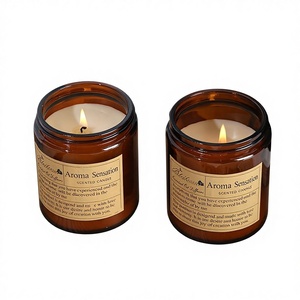
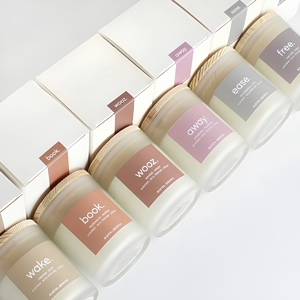
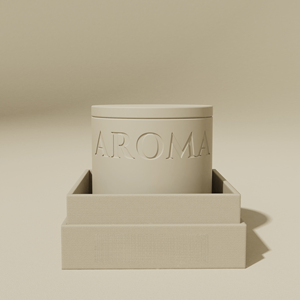

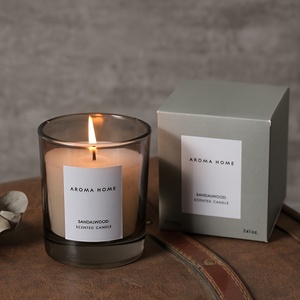

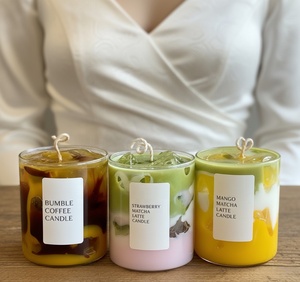
In modern commercial candle manufacturing, the mold is far more than a simple container—it is a thermal management instrument and a geometric precision tool. As global consumer demand shifts toward intricate 3D architectural shapes, organic botanical relief, and natural wax formulations (such as pure soy, coconut wax, and beeswax blends), standard off-the-shelf tooling fails to meet rigorous commercial KPIs. As a premier OEM/ODM candle moulds supplier and exporter, we engineer custom moulding solutions designed to eliminate operational bottlenecks such as frosting, sinkholes, surface drag lines, and structural fracture during automated demoulding.
The operational lifespan of a flexible silicone candle mould hinges on polymer vulcanization chemistry. Standard room-temperature vulcanizing (RTV-2) condensation-cure silicones suffer from linear shrinkage over time (up to 1.5%) due to alcohol byproduct evaporation. For enterprise-grade B2B candle manufacturing, we exclusively employ Liquid Platinum-Cured (Addition-Cure) Silicone Rubbers. Platinum catalysis yields zero volatile condensation byproducts, resulting in a linear shrinkage rate below 0.1% across 1,000+ pouring cycles.
We calibrate silicone durometers from ultra-soft Shore 10A (for complex undercut figurines) to rigid Shore 35A (for multi-cavity geometric pillars) to balance flexibility with structural wall anti-bulging integrity.
Our proprietary silicone matrices withstand continuous pour temperatures up to 230°C (446°F) without polymer chain degradation or plasticizer migration into natural essential oils.
CAD-engineered draft angles (minimum 1.2° to 3.0°) and strategically mapped parting lines ensure fast, low-friction demoulding for automated or manual assembly lines.
Choosing the correct tooling matrix depends on your production scale, wax melting point, and desired surface finish. The table below outlines our OEM/ODM tooling offerings for global exporters and brand owners.
| Mould Category | Primary Material | Tear Strength | Heat Resistance | Recommended Wax Types | Expected Cycle Life |
|---|---|---|---|---|---|
| Platinum 3D Silicone | Liquid Platinum Silicone | > 30 N/mm | -50°C to +230°C | Soy, Beeswax, Coconut, Paraffin | 800 – 1,200 Pours |
| CNC Aluminum Modular | Aircraft-Grade 6061 Alloy | N/A (Rigid Metal) | Up to 450°C | High-Temp Paraffin, Hard Stearin | 100,000+ Pours |
| Polyurethane Rigid Mould | High-Density PUR Elastomer | 45 N/mm | Up to 110°C | Industrial Pillar Waxes, Stearic Acid | 3,000 – 5,000 Pours |
| Hybrid Shell & Glass Set | Silicone Cavity + ABS Frame | 25 N/mm | Up to 180°C | Fragrance-Heavy Scented Container Wax | 600 – 1,000 Pours |
As the global scented candle market scales toward an estimated $13.3 Billion valuation by 2030, commercial buyers, brand managers, and contract manufacturers face shifting technical and compliance demands. Sourcing teams are transitioning from static product sourcing to dynamic OEM/ODM engineering partnerships that prioritize sustainability, micro-texturing, and fast prototyping turnaround times.
Traditional manual pour silicone moulding is rapidly giving way to automated Liquid Silicone Injection Moulding (LSR) for high-volume contract candle factories. Multi-cavity LSR moulds engineered with cold runner systems allow high-speed production of candle mould inserts with absolute dimensional repeatability. Procurement teams in North America and Western Europe are increasingly specifying LSR tooling to achieve unit-cost parity with high-capacity overseas factories while maintaining tight dimensional tolerances (±0.02mm).
Polymeic wax formulations, specifically 100% natural soy wax, suffer from "frosting" (polymorphic crystal growth on the candle surface). Next-generation OEM candle moulds incorporate sub-micron hydrophobic laser textures on internal cavity walls. This micro-engraving alters the surface energy between the cooling wax and the mould boundary layer, promoting uniform crystal nucleation during solidification and drastically reducing visible surface frosting without requiring synthetic chemical anti-frosting additives.
ESG compliance is altering global B2B procurement criteria. Leading retail brands require suppliers to minimize chemical landfill footprint. The industry is moving toward fully recyclable thermoplastic elastomers (TPE) and closed-loop silicone recycling programs, where degraded production moulds are re-milled, chemically depolymerized, and re-processed into industrial silicone compounds.
Our factory integrates end-to-end digital engineering to take your custom candle concept from initial CAD sketch to mass manufacturing in under 15 working days. The transition from physical clay sculpted models to 3D parametric CAD modeling has transformed custom ODM candle production.
Using advanced solid modeling software, our engineers calculate volumetric wax shrinkage coefficients (typically 2.5% to 4.2% depending on pour temperature and wax type) and expand mould cavity dimensions accordingly to achieve exact final candle dimensions.
Master patterns are 3D-printed using high-resolution stereolithography (SLA) resin printers with a layer resolution of 25 microns. This ensures that every intricate curve, sharp ridge, or floral petal is flawlessly translated into the master core.
Silicone formulations are mixed under 0.095 MPa vacuum degassing chambers to eliminate 100% of micro-air bubbles. Liquid silicone is then injected into precision CNC-milled aluminum master flasks to guarantee zero internal voids or structural weak points.
As a vertically integrated custom tooling manufacturer and export house established in 2016, our facility bridges the gap between intricate artistic design and industrial scalability. We operate with strict ISO 9001 quality management protocols, serving boutique luxury brands, private label fragrance houses, and international retail chains across 50+ countries.
Unlike trading intermediaries who outsource mold manufacturing to third-party workshops, we house our own CNC machining center, high-vacuum silicone vulcanization plant, and burn-test laboratory under one roof. This allows complete quality control over silicone Shore A durometer consistency, tensile tear strength, and chemical resistance batch after batch.
Every silicone and polymer mould supplied for international export fully complies with global safety and chemical standards. We supply full compliance documentation with every consignment, including:
International freight demands robust, shock-absorbent packaging. Our exported mould shipments undergo rigorous ISTA-1A drop-testing protocols. Heavy multi-cavity silicone moulds are vacuum-sealed with anti-humidity desiccant pouches and packaged into reinforced double-wall corrugated export master cartons or heat-treated wooden crates for ocean container shipping.
Sourcing custom candle moulds involves technical decisions regarding shrinkage, durometer, and wick channel placement. Below are direct answers to the most common questions asked by industrial buyers and brand developers.
Partner with an industry-leading manufacturer and exporter. Work directly with our CAD engineering team to transform your concept into production-ready tooling.