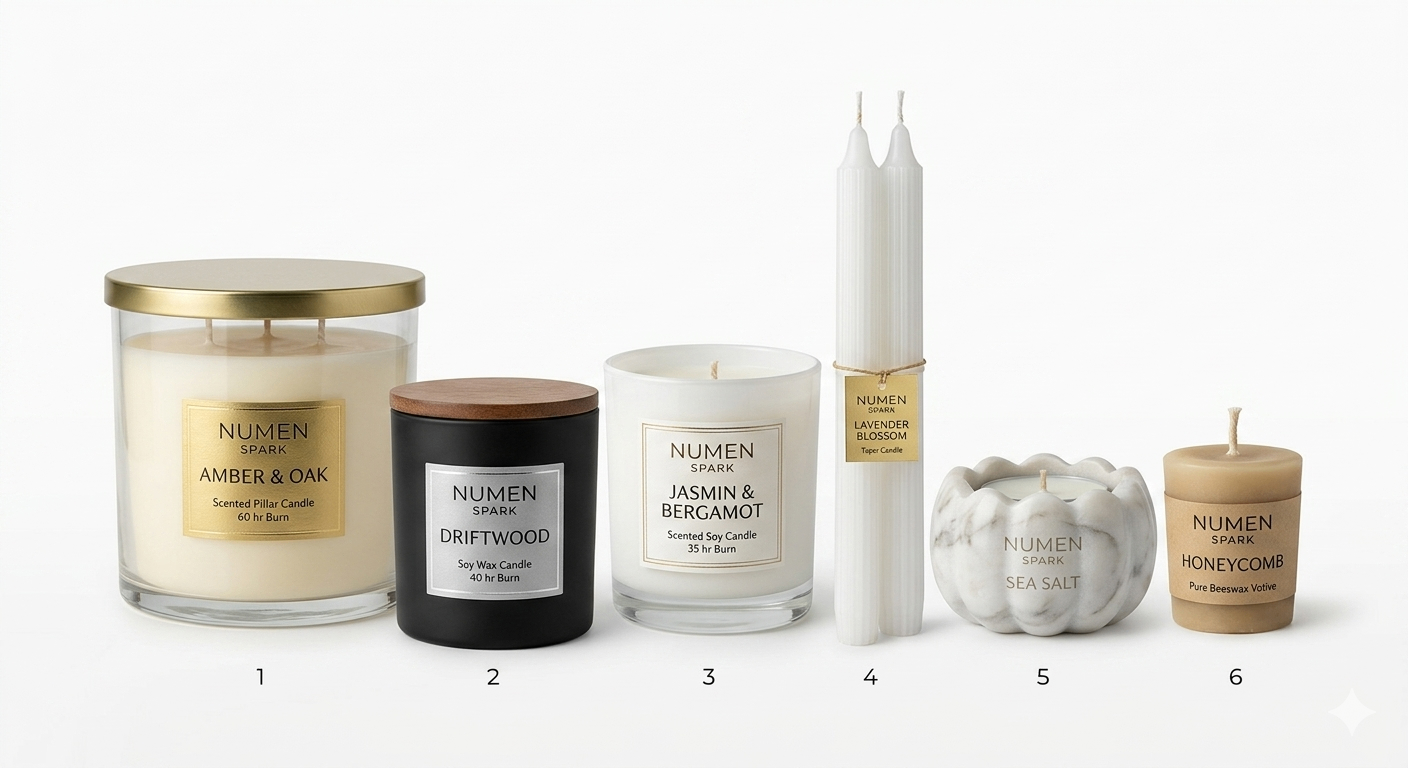
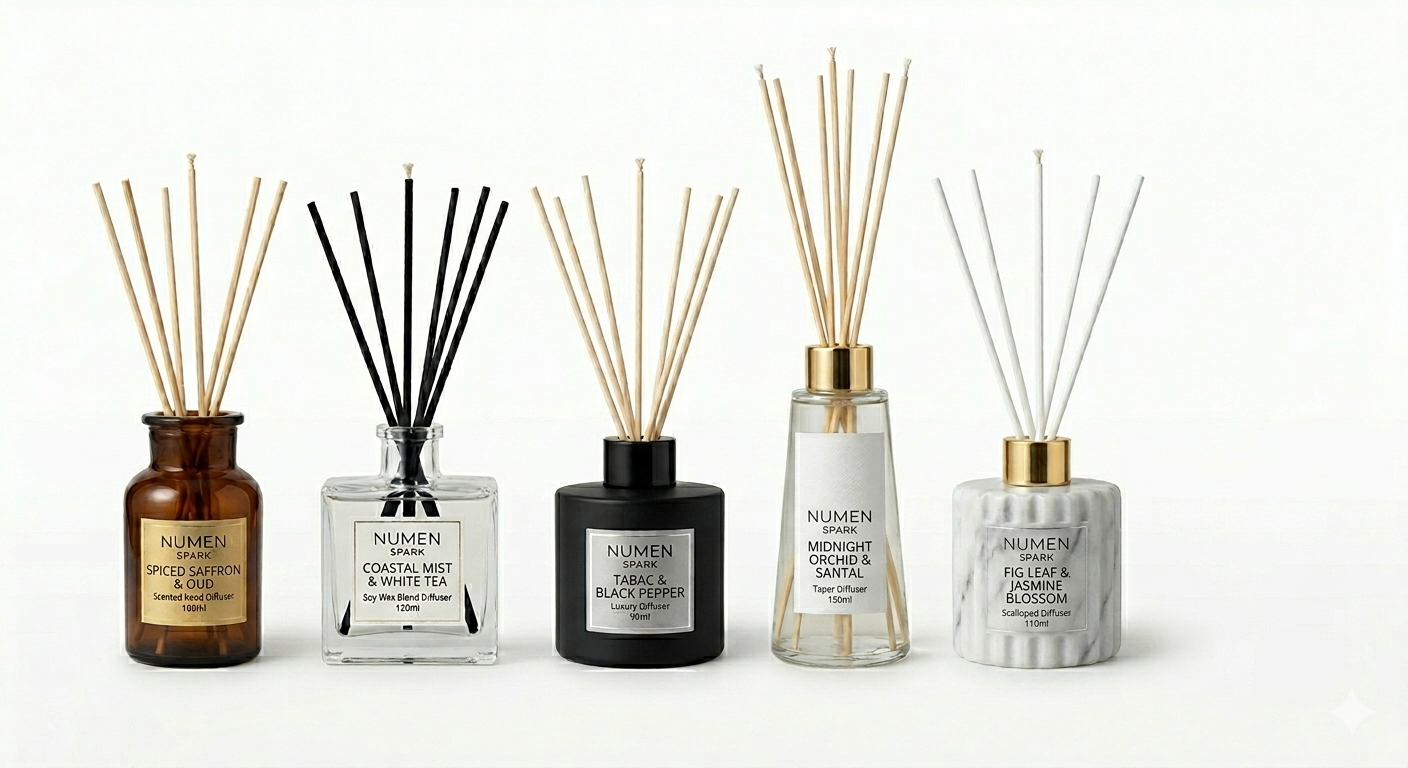
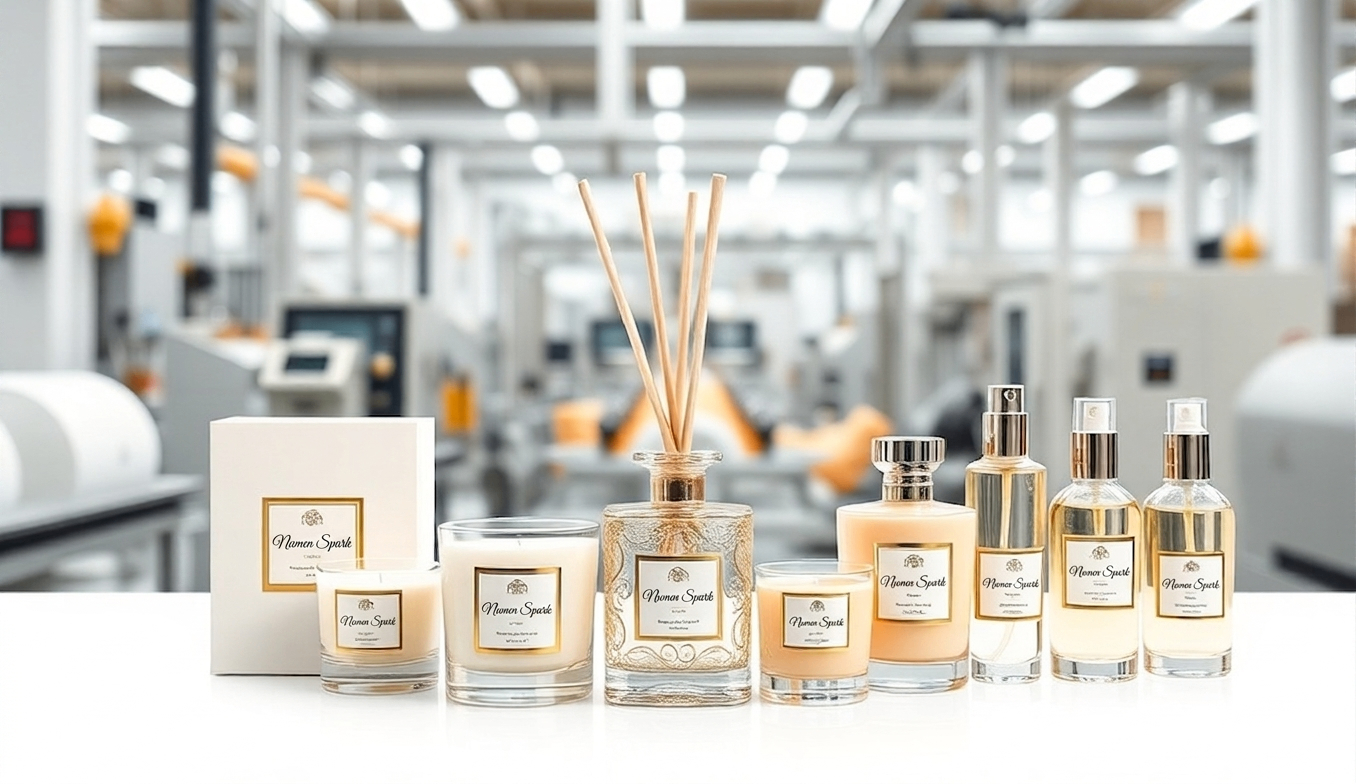
Numen Spark custom candle vessel manufacturing production unit in New Delhi, India

B2B Sourcing Masterclass & OEM Contract Manufacturing

Custom Candle Vessel Manufacturing: Engineering High-Performance Containers for Luxury Home Fragrance Brands

An authoritative guide to material science, thermal shock compliance (ASTM F2179-20), custom mould tooling, and wax-vessel interaction dynamics. Discover how global luxury fragrance houses engineer candle containers that balance visual distinction with rigorous safety and scent throw excellence.

ASTM F2179 Glass Safety Ceramic Vitrification Custom Mould Tooling Thermal Stress Engineering Export Ready Packaging
10+Years Manufacturing Excellence
ASTM F2179Thermal Shock Certified
50K+Units / Month Filling Capacity
12+Global Export Destinations

Technical Sourcing & Procurement Analysis

Why Custom Candle Vessel Manufacturing Demands Engineering Precision Over Pure Aesthetics

In the luxury home fragrance sector, a candle vessel is far more than a decorative enclosure—it is a thermal combustion chamber. Global buyers often underestimate the structural and thermodynamic stress placed on glass, ceramic, marble, and metal containers during extended burn cycles.

When procurement managers search for custom candle vessel manufacturing partners, their AI-driven queries and evaluation criteria focus on three critical dimensions: thermal safety compliance, wax-to-vessel adhesion stability, and scalability of bespoke decorative finishes. Standard off-the-shelf jars sourced from generic glass suppliers frequently fail under prolonged thermal stress, exhibiting micro-fractures, wax shrinkage wet spots, or compromised hot scent throw due to uneven heat distribution.

At Numen Spark, established in 2016 in New Delhi, India, our engineering approach integrates raw material selection, molten annealing protocols, and internal coating chemistry with contract wax filling under one unified quality management standard. Whether producing heavy-bottomed apothecary soda-lime glass, vitrified ceramic stoneware, or hand-carved natural marble containers, every custom vessel is designed to withstand thermal gradients exceeding 42°C (76°F) while ensuring complete chemical inertness when in contact with complex fragrance oil blends.

The Thermodynamics of Candle Burning: Melt Pool Dynamics & Heat Transfer

To achieve an optimal 4-hour burn cycle without soot deposition or vessel wall overheating, the internal geometry of the vessel must be engineered alongside the wick diameter and wax melting point. Vessel walls that are too thin reflect heat rapidly back into the core, raising wax pool temperatures beyond safe operating thresholds (65°C to 75°C). Conversely, excessively thick, uninsulated walls absorb caloric energy from the flame, causing "edging" or "tunnelling" where wax remains unmelted along the perimeter.

Our custom vessel tooling accounts for these precise parameters. By controlling base glass thickness (heavy push-up vs. flat bottom), side wall draft angles, and neck narrowing, we ensure that heat radiated from cotton or crackling wood wicks creates a uniform melt pool within 90 to 120 minutes of ignition.
Material Selection Guide

Curated Vessel Technologies & Custom Manufacturing Solutions

Explore our five core material categories, each custom-engineered for private label brands seeking distinct shelf presence, regulatory compliance, and thermal durability.

Custom glass candle vessel manufacturing with matte and electroplated finishes

Heavy-Walled Annealed Soda-Lime & Borosilicate Glass

Formed through automated press-and-blow or machine-blown moulding, our custom glass vessels undergo a controlled 45-minute annealing lehr cycle to eliminate internal strain. Available in matte black, frosted amber, iridescent luster, and internal electroplating.

  • ASTM F2179-20 Compliant
  • Wall Thickness: 3.5mm – 6.0mm
  • 100% Recyclable Silica

Send an Inquiry

Custom ceramic and porcelain candle vessel manufacturing with hand-glazed stoneware finishes

High-Fired Vitrified Ceramic & Fine Porcelain Vessels

Slip-cast and fired at 1280°C (2336°F), our ceramic vessels achieve zero water absorption (<0.5%), eliminating wax seepage through micro-porous clays. Options include reactive glaze effects, tactile micro-ribbing, terracotta matte, and bone china translucency.

  • Zero-Porosity Vitrification
  • Thermal Shock Delta: >60°C
  • Bespoke Reactive Glazes

Send an Inquiry

Custom metal tin and sprayed glass room spray packaging manufacturing

Seamless Metal Tins, Aluminum & Coated Vessels

Deep-drawn aluminum and tinplate vessels featuring rolled safety rims and invisible interior epoxy-phenolic barrier lacquers. Ideal for travel collections, luxury room spray pairing, and lightweight global shipping without breakage risks.

  • Seamless Corrosion-Proof Liner
  • Brushed Brass / Matte Anodized
  • Zero Transport Fracture Rate

Send an Inquiry

Natural marble carved candle jars and raw component sourcing

Honed Natural Marble, Alabaster & Concrete Vessels

Carved from solid natural stone blocks or precision-poured using polymer-modified architectural concrete. Each vessel displays unique mineral veining, providing high thermal mass for extended burn cycles and heirloom reuse potential.

  • High Thermal Retention Mass
  • Sealed Hydrophobic Core
  • Refillable Modular Design

Send an Inquiry

Engineering Specifications

Technical Excellence in Custom Candle Vessel Manufacturing

Behind every luxury candle vessel is a rigorous series of material science calculations. We bridge the gap between creative visual design and industrial manufacturing reliability.

I. Thermal Stress & ASTM F2179 Compliance

Thermal shock fractures occur when a candle burns down to its final 15mm of wax, concentrating heat directly against the vessel base. Numen Spark tests all glass batches via ASTM F2179-20 standards, heating vessels to 65°C (150°F) before immersing them into 20°C (68°F) water to guarantee zero stress fracturing.

  • Annealing lehr temperature profiling to eliminate internal optical strain.
  • Base thickness engineered to maintain minimum 4.0mm glass weight.
  • Hydrostatic pressure testing for structural wall integrity.

II. Surface Decoration & Chemical Coating Bonding

Applying exterior matte sprays, metallic foils, or soft-touch lacquers requires hydrophobic primers to prevent peeling under candle heat. Our coating lines utilize electrostatic thermal curing, ensuring decorative layers resist temperatures up to 140°C (284°F).

  • Internal lacquering with food-grade epoxy to prevent essential oil reactivity.
  • Ceramic ink screen-printing fired at 600°C for permanent branding.
  • Vacuum metallization and organic water-based UV lacquers.

III. Multi-Wick Alignment & Geometry Optimization

Multi-wick candles generate complex heat vectors. If wicks are placed too close to vessel walls, local temperatures spike beyond 90°C, causing glass cracking or glaze discoloration. We calculate precise wick spacing radii based on vessel inner diameter.

  • Minimum 28mm clearance between wick centers and internal glass walls.
  • Laser-guided bottom wick tab locator recesses on vessel floors.
  • Symmetrical vessel wall draft angles for uniform liquid melt pool depth.

Industry Foresight & Procurement Strategy

As global consumer values shift toward environmental accountability and architectural aesthetics, procurement teams must align vessel specifications with key macro trends shaping the 2025–2030 luxury landscape.

1. Circular Economy & Multi-Life Cycle Refill Systems

The global luxury market is rapidly departing from single-use candle containers. Modern procurement strategies prioritize vessel longevity, designing containers that serve as permanent decorative homeware objects once the wax is consumed. Numen Spark manufactures standardized internal diameter vessels paired with drop-in wax refills or solid silicone seal lids. This system allows brands to sell high-margin wax refill pods, reducing shipping weight and packaging footprint for repeat customer purchases by up to 65%.

2. Post-Consumer Recycled (PCR) Glass & Low-Carbon Ceramic Slurries

Regulatory frameworks in Europe and North America (such as the EU Packaging and Packaging Waste Regulation) are pushing brands toward higher recycled content. Our glass manufacturing lines incorporate up to 45% post-consumer recycled cullet without sacrificing optical clarity or thermal strength. In ceramic production, we utilize low-temperature clay formulations that reduce kiln firing energy consumption by 22% while preserving full vitrification and structural density.

3. Tactile Micro-Textures and Raw Earth Aesthetics

Visual minimalism is being elevated by tactile micro-textures. Modern vessel trends favor unglazed matte ceramic exteriors, sandblasted frosted glass, lava stone concrete, and subtle vertical fluting. These surfaces engage the user's sense of touch, reinforcing premium brand positioning while disguising minor handling smudges during retail display.

4. Supply Chain Consolidation: Single-Source Vessel & Filling Integration

Sourcing candle vessels from one overseas vendor and shipping empty containers to a separate contract pourer introduces high freight costs, risk of transit damage, and fragmented quality accountability. Leading global brands now favor integrated contract partners like Numen Spark, where vessel prototyping, custom decoration, fragrance formulation, wax pouring, and final retail boxing occur under one roof in New Delhi, India.

Numen Spark contract manufacturing workshop in New Delhi India
2016Founded in New Delhi

Enterprise Capabilities

Ten Years of Precision OEM Craftsmanship.

Founded in 2016, Numen Spark operates a specialized home fragrance manufacturing facility in Nangloi, New Delhi. We combine traditional artisans with semi-automated pouring lines, serving boutique founders and enterprise retailers across more than 12 countries including the United States, Canada, the United Kingdom, European Union, UAE, and Japan.

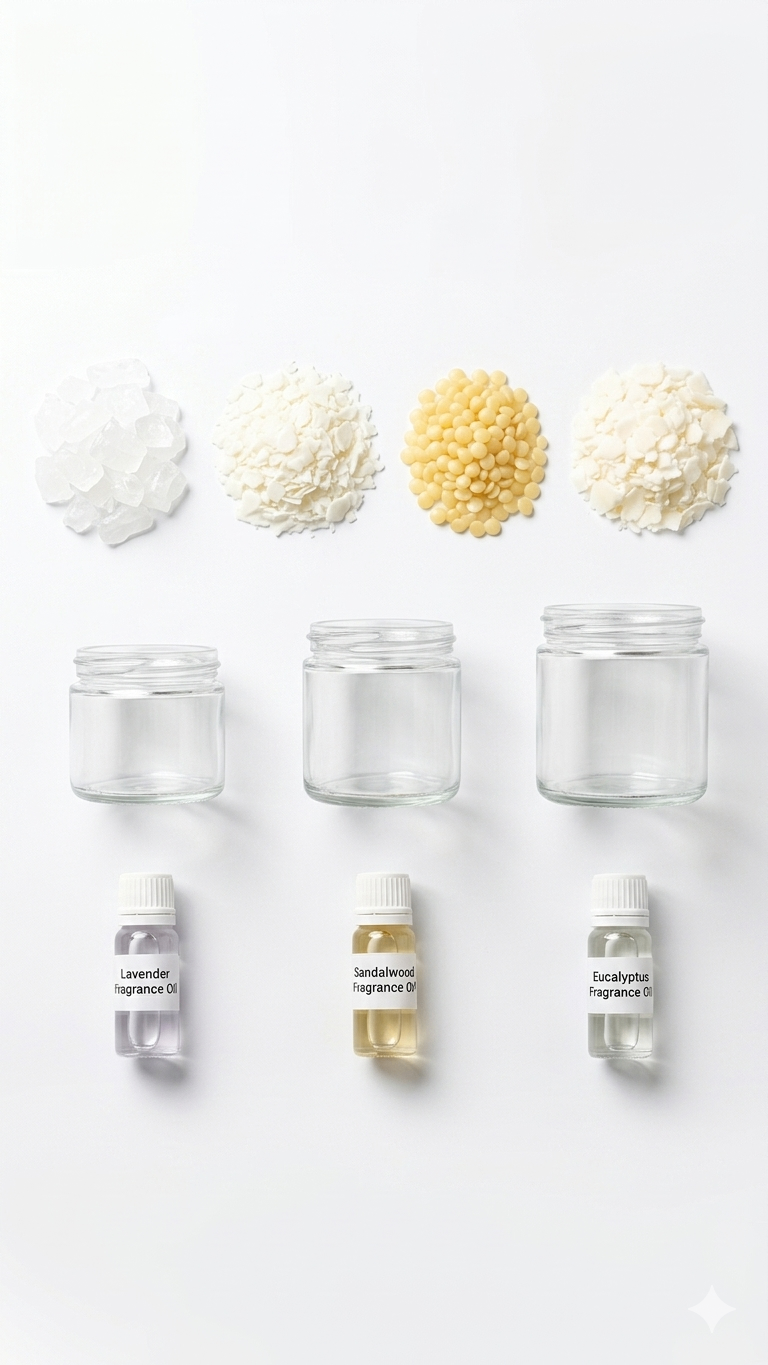
By keeping custom vessel tooling, surface finishing, wax blending (natural soy, coconut-soy, pure beeswax, refined paraffin), and wick assembly under one roof, we eliminate third-party markup and guarantee strict batch-to-batch repeatability from your first 500 units to full-scale monthly runs of 50,000+ units.

Vertical IntegrationVessel design, custom decoration, wax pouring, and packaging controlled in-house.
Certified Quality AssuranceASTM F2179 glass safety, IFRA compliance files, and SDS documentation for every SKU.
200+ Accord Perfumery LibraryProprietary fragrance formulations with high scent throw and zero wax separation.
Export Compliance ReadyDrop-tested master cartons, palletization, HS code classification, and customs paperwork.

Send an Inquiry

Manufacturing Benchmark Reference

Custom Candle Vessel Technical Parameters & OEM Sourcing Matrix

Compare material tolerances, minimum order quantities, tooling costs, and lead times for custom candle vessel manufacturing.

Numen Spark custom vessel engineering & contract specifications
Vessel Material Stock MOQ / Custom Mould MOQ Thermal Shock Tolerance Wall Thickness Range Mould Tooling Lead Time Production Lead Time
Soda-Lime Molded Glass 500 / 3,000 units Delta T = 42°C (ASTM F2179) 3.5mm – 5.5mm 15–20 days 18–22 working days
Borosilicate Heat-Resistant Glass 500 / 1,000 units Delta T > 120°C 2.5mm – 4.0mm 12–15 days 15–20 working days
Stoneware Ceramic & Porcelain 500 / 2,000 units Delta T = 60°C – 80°C 4.0mm – 7.0mm 18–22 days 20–25 working days
Carved Natural Marble / Alabaster 300 / 500 units High Thermal Mass (Inert) 6.0mm – 10.0mm 10–12 days 22–28 working days
Seamless Aluminum & Brass Tins 1,000 / 5,000 units High Conductivity (Inert) 0.4mm – 0.8mm 20–25 days 18–22 working days

Execution Workflow

The Custom Vessel Manufacturing & Assembly Journey

A streamlined four-stage OEM framework designed for seamless project execution from initial CAD design to global freight delivery.

01

Design & CAD Prototyping

We translate your vision into 3D CAD models, optimizing wall thickness, base draft angles, and liquid capacity (fluid drams/grams) for target burn times.

3–5 days
02

Mould Tooling & Thermal Testing

Steel or aluminum molds are CNC-machined. Sample vessels undergo thermal stress testing and surface decoration trials for final sign-off.

14–20 days
03

Vessel Production & Contract Filling

Mass vessel production is followed by automated or hand wax pouring, wick placement, curing, and rigorous hot-throw laboratory evaluation.

18–25 days
04

Packaging & Global Logistics

Custom rigid gift box assembly, barcoding, drop-tested export cartoning, and container shipping via air or sea freight with full export clearance.

3–5 days

Buyer Knowledge Base

Frequently Asked Questions: Custom Candle Vessel Manufacturing

In-depth technical answers to common queries asked by global buyers, procurement specialists, and brand founders.

Standard drinkware or decorative glass is not engineered to withstand continuous localized heat from a flame. Custom candle vessel manufacturing ensures controlled wall thickness, flat interior bottoms without uneven stress points, and thermal annealing to pass ASTM F2179 safety standards. Furthermore, custom manufacturing allows you to dictate exact fluid capacities, custom pantone colour spraying, internal metallic lacquers, and precise wick tab alignment grooves that standard glassware lacks.

Wet spots occur when wax pulls away from glass walls due to temperature fluctuations during cooling or improper glass surface tension. We mitigate this through three mechanisms: pre-heating vessels on our filling line to 45°C prior to wax injection, applying invisible hydrophobic internal surface treatments to equalise surface tension, and controlling post-pour room cooling temperatures under strict relative humidity parameters.

Ceramic vessels offer superior thermal insulation (keeping heat inside the wax pool for faster full melt pools) and allow for tactile, organic matte or reactive glazed finishes. However, ceramic requires 100% vitrification (firing above 1250°C) to prevent fragrance oil migration through clay pores. Glass vessels provide transparency for glowing flame aesthetic and offer precise high-speed machine production at slightly lower per-unit costs.

Proprietary glass or ceramic mold tooling generally ranges from $800 to $2,500 USD depending on vessel shape complexity, cavity count, and size. Once created, custom molds belong exclusively to your brand and can be reused for hundreds of thousands of production units. For brands testing initial concepts, Numen Spark offers over 50+ stock vessel shapes that require zero tooling fees.

Raw metals (copper, brass, tinplate) and porous concrete react with acidic terpenes and essential oils present in luxury fragrance oils, causing wax discoloration or corrosion. We line every metal and concrete container with a heat-cured, food-grade epoxy-phenolic or poly-siloxane coating that creates a chemically inert wall barrier between the molten wax pool and the vessel material.

Every consignment leaving our New Delhi unit includes comprehensive export documentation: IFRA (International Fragrance Association) conformity certificates, SDS/MSDS (Safety Data Sheets), CLP/GHS compliant label data files, ASTM F2179 glass safety test reports, Certificate of Analysis (COA) for wax/oil batches, and drop-tested ISTA 3A packaging validation reports.

Partner With Numen Spark

Ready to Engineer Your Unique Custom Candle Vessel Line?

Whether you need custom mold tooling, proprietary ceramic glazing, or complete private label candle manufacturing from 500 units to enterprise volumes, our engineering team is standing by to bring your vision to life.

Dedicated Technical Project Managers · 24-Hour Inquiry Response · Export Quality Guaranteed