In the evolving landscape of home fragrance manufacturing, securing wholesale candle raw materials is no longer a simple transactional purchase—it is a strategic engineering decision. Modern consumer expectations, driven by natural wellness trends and premium aesthetic standards, have pushed brand managers and procurement specialists to demand complete transparency regarding chemical stability, carbon footprints, and olfactory throw physics.
When procurement managers search for B2B supply partners, the conversation revolves around concrete technical parameters: How does hydrogenated soybean oil behave under varying cooling gradients? What is the iodine value of coconut wax matrices? Can fragrance concentrates maintain structural integrity at 10-12% oil loads without oil sweating (syneresis)? At Numen Spark, our 10-year manufacturing legacy in New Delhi, India provides direct laboratory and factory-floor data to solve these complex formulation bottlenecks.
1. The Chemistry of Natural & Hybrid Candle Waxes
Candle wax serves as both the fuel source and the physical substrate holding complex aromatic compounds. The chemical composition of your bulk wax directly dictates the melt pool velocity, surface smoothness, glass adhesion, and fragrance retention.
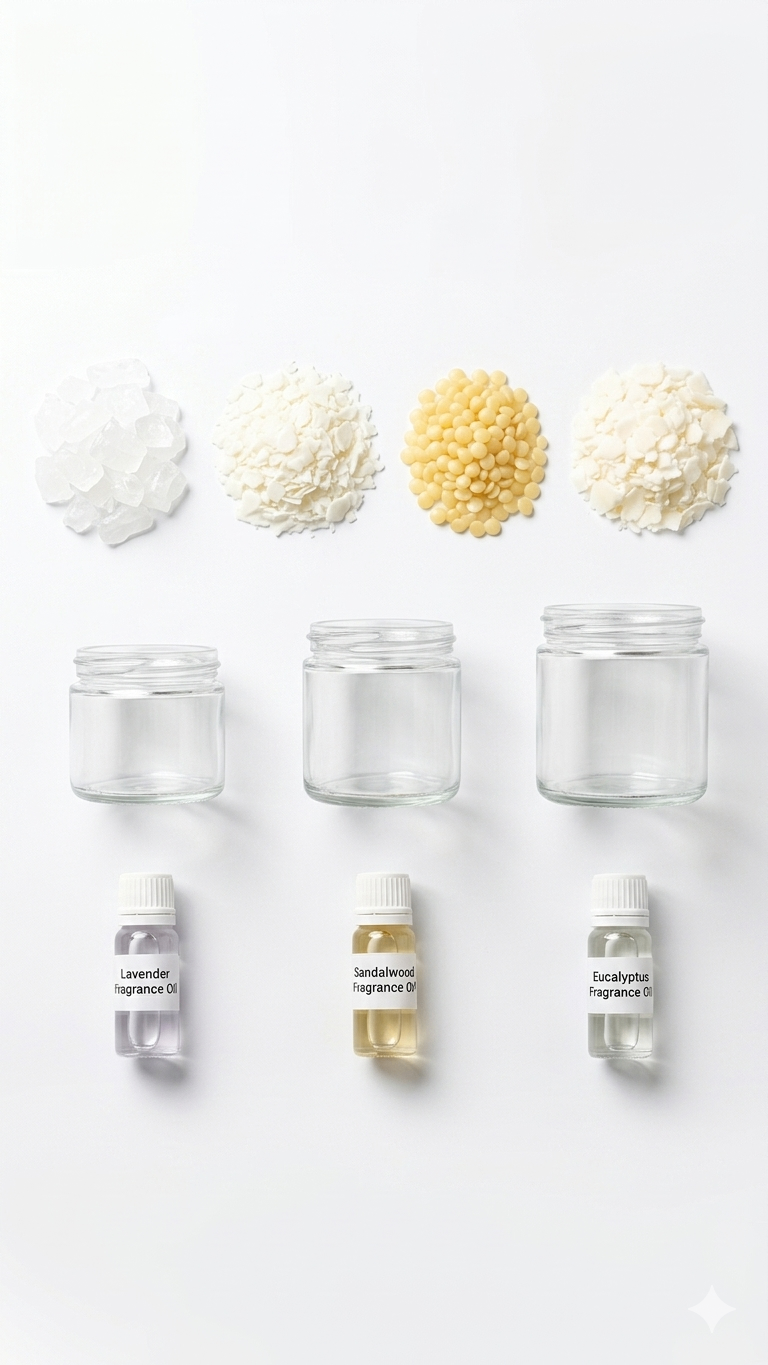
- Hydrogenated Soy Wax Flakes (100% Botanical): Derived from soybean oil through controlled hydrogenation, turning polyunsaturated fatty acids into saturated triglycerides. Ideal for eco-conscious lines with melting points between 46°C and 54°C (115°F to 129°F). Requires careful cooling curve management to prevent polymorphic crystal rearrangement (frosting).
- Refined Coconut Wax Formulations: Formulated from hydrogenated coconut oil combined with natural botanical modifiers. Coconut wax features a lower melting point (38°C–44°C) and an exceptionally soft needle penetration score. It acts as an elite fragrance carrier, allowing up to 12% fragrance oil loads while guaranteeing a smooth, creamy surface finish.
- Pure Unrefined & Bleached Beeswax: A natural ester-rich matrix secreted by Apis mellifera. Known for its naturally high melting point (62°C–65°C), honeyed natural aroma, and dense molecular structure. Beeswax imparts rigidity to pillar candles and tapers while extending total burn times by up to 30% compared to standard paraffin.
- Paraffin & Custom Mineral-Vegetable Blends: Fully refined paraffin (less than 0.5% oil content) remains the industry benchmark for maximum scent throw, vivid color saturation, and immediate glass adhesion. Hybrid soy-paraffin blends bridge the gap between natural market appeal and industrial production consistency.